Filter by jurisdictions
- Asia Pacific 19
- Australia 3
- Brazil 1
- California 3
- China 1
- Denmark 1
- Draft proposal 25
- EU 7
- Europe 11
- Final rules 24
- France 1
- India 1
- Indonesia 1
- Japan 2
- Latin America 3
- Minnesota 2
- New Jersey 2
- New Mexico 1
- New York 3
- New Zealand 1
- North America 1
- Oceania 4
- Peru 2
- Philippines 4
- Singapore 1
- South Korea 1
- Southeast Asia 9
- Taiwan 2
- UK 3
- US federal 2
- US states 13
- Ukraine 1
- United States 15
- Vietnam 3
- Virginia 1
- Washington D.C. 1
- Washington state 1

Minnesota PFAS Reporting Deadline Nears as Extension and Waiver Requests Close August 16
Manufacturers selling products in Minnesota face an August 16, 2026, deadline to mail requests for additional reporting time or a waiver, followed by the September 15 deadline for submitting PFAS-in-products reports.
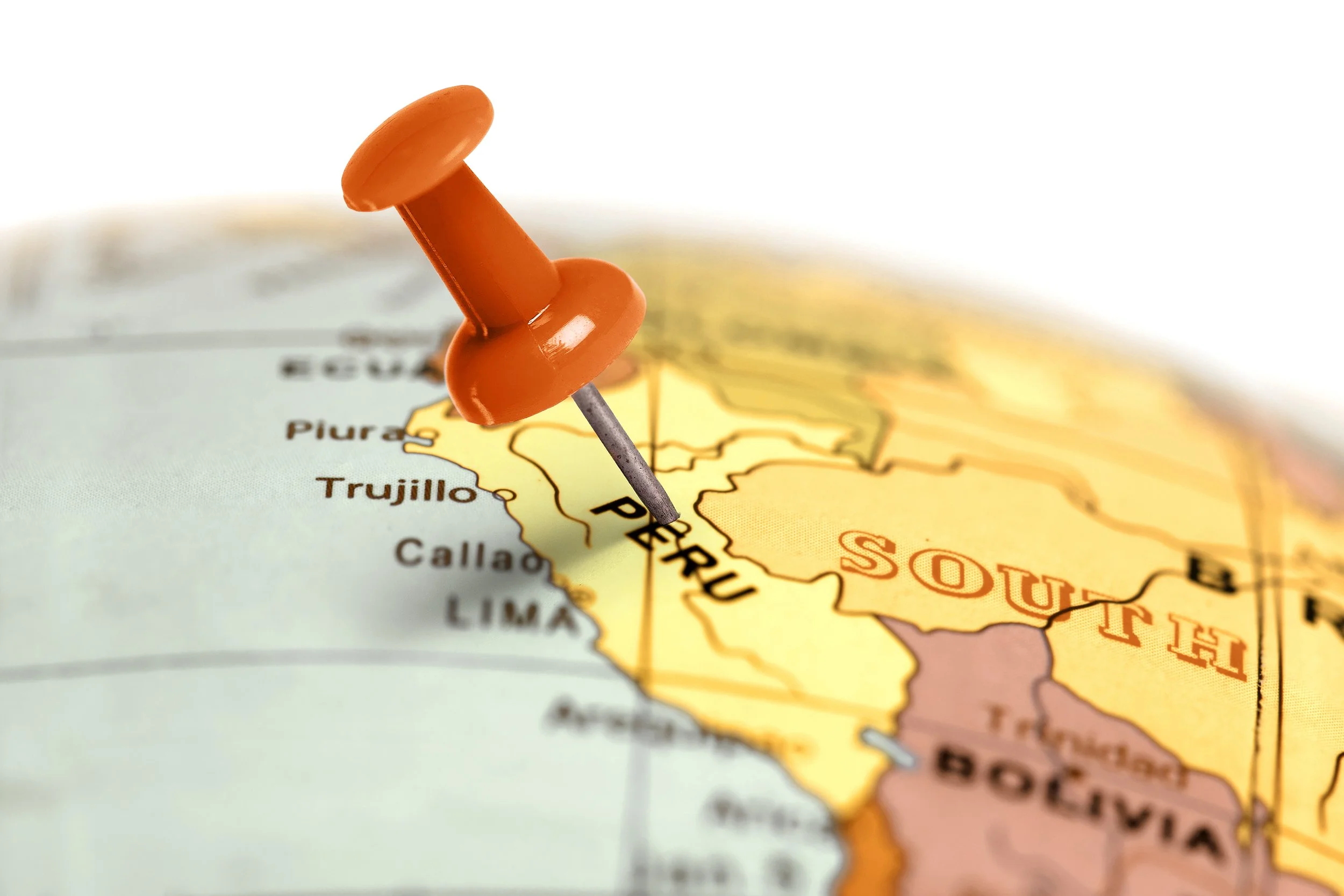
Peru’s new chemical notification and reporting rules: What companies must know
Peru’s new chemical framework creates staggered notification and RENASQ reporting duties for manufacturers and importers, including chemical identity, classification, labels, SDS, annual quantities and risk evaluations.
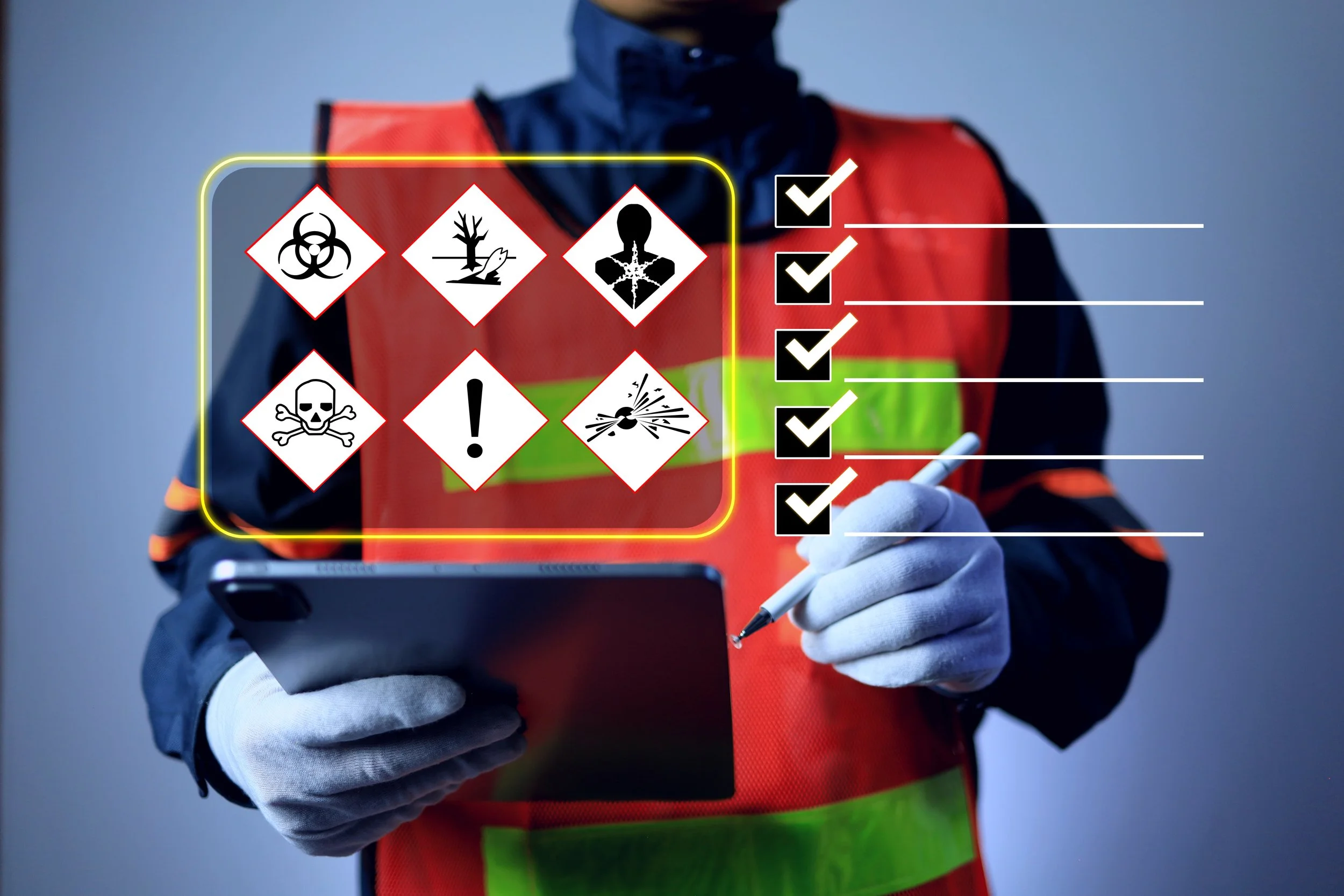
Peru’s New GHS Rules: What companies need to know about classification, labels and safety Data Sheets
Peru’s new chemical regulation requires companies to self-classify substances, prepare Spanish GHS labels and safety data sheets, follow label sizing rules, manage small-container requirements and update documents when hazards change.
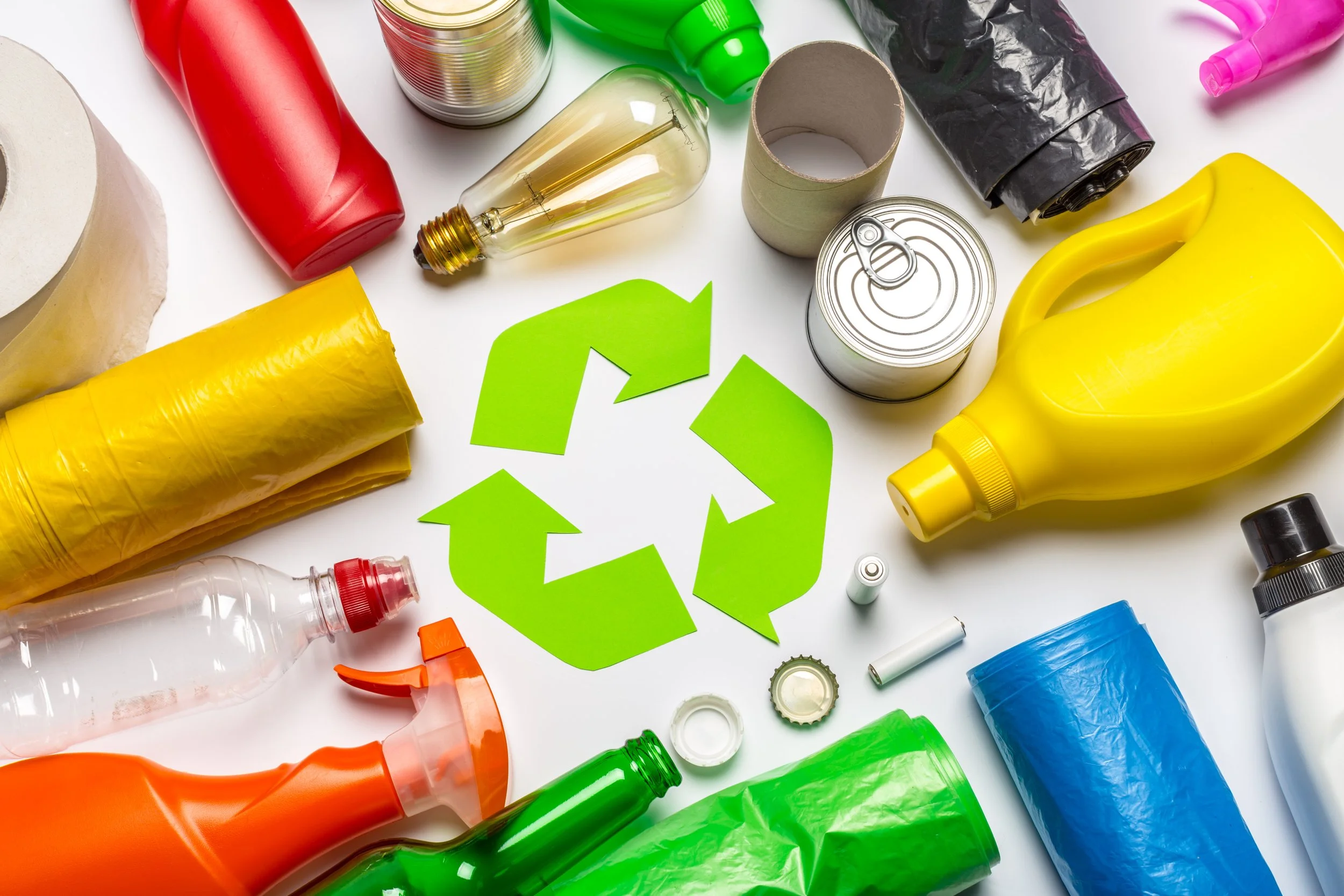
Philippines introduces bill mandating recycling label
Philippines House Bill No. 9281 would require recycling labels, material disclosures, disposal instructions, and substantiated packaging claims.
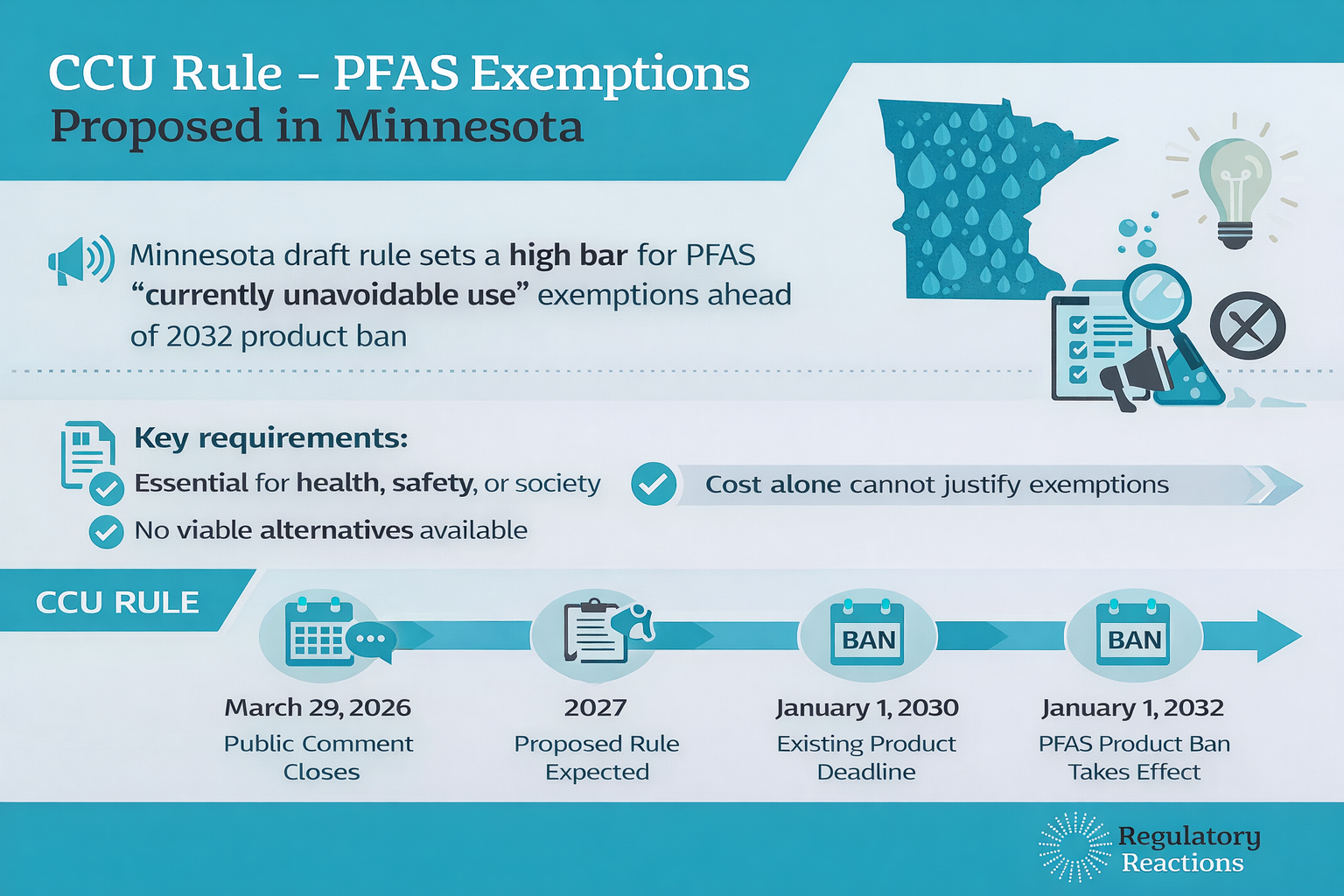
Public comment period is ending for Minnesota’s “unavoidable use” rule for exempting PFAS prohibition
Minnesota advances PFAS exemption rule, detailing CUU waivers, timelines, and key industry questions ahead of the 2032 ban.
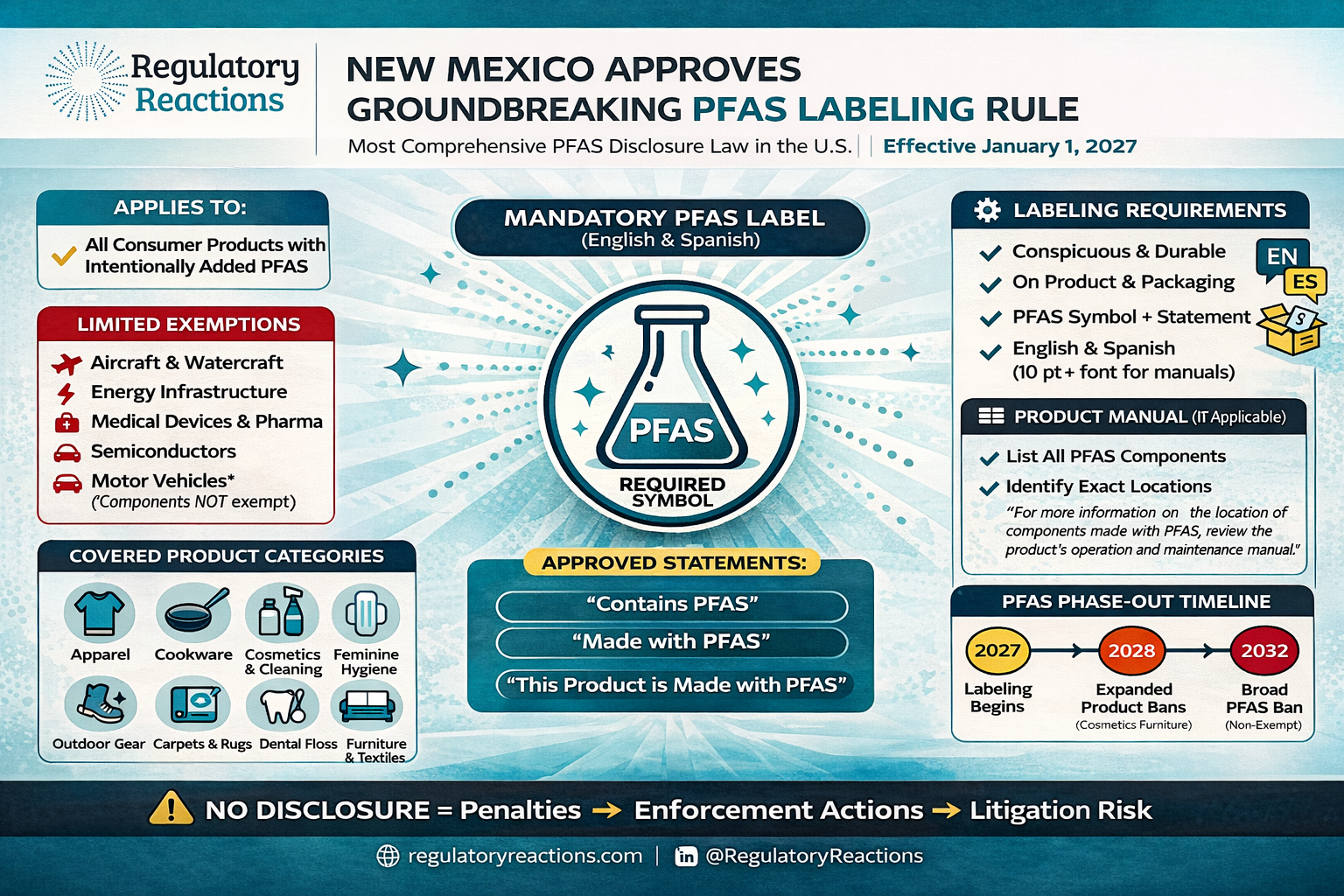
New Mexico approves sweeping PFAS Labeling Rule for Consumer Products
New Mexico mandates PFAS labels on most consumer products by 2027, creating the most comprehensive U.S. disclosure framework.
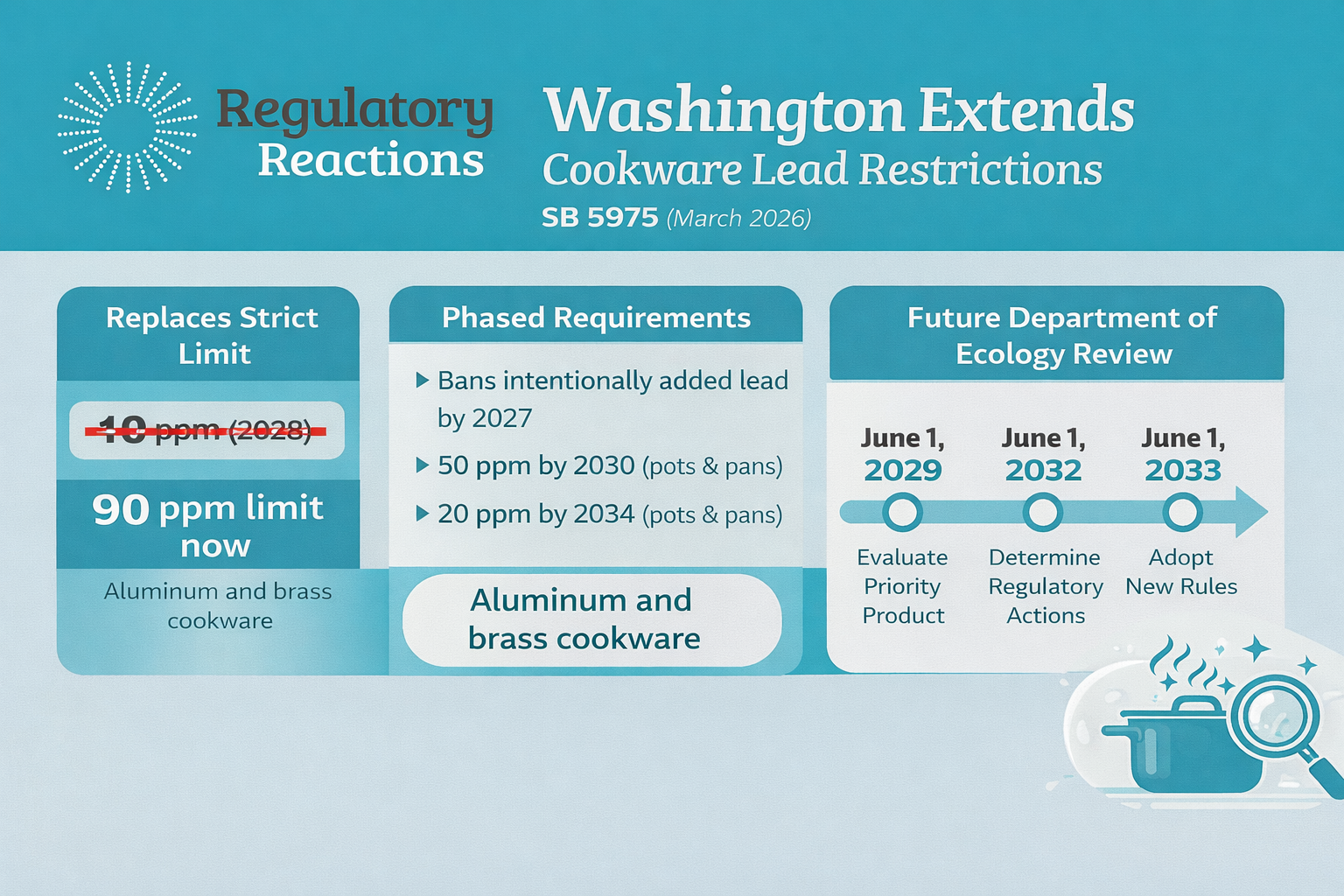
Washington Revises Lead Limits for Cookware, Extends Timeline
Washington enacted SB 5975, replacing a planned 10 ppm cookware lead limit for 2028 with phased limits of 50 ppm (2030) and 20 ppm (2034).
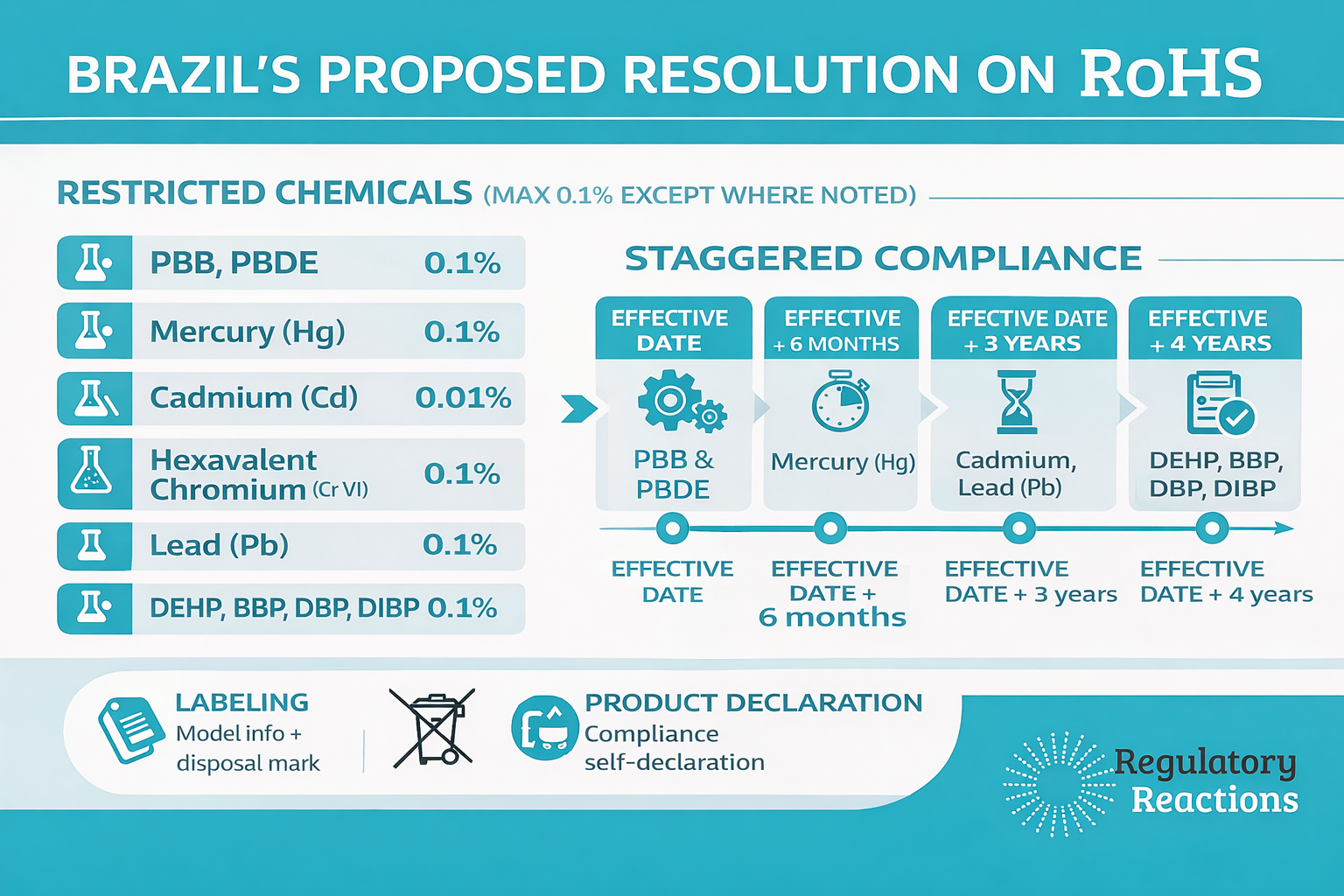
Brazil on track to implement RoHS-style restrictions on hazardous substances in electronics
Brazil updates draft proposal to implement RoHS-style EEE rules, adding exemptions, stricter registration, and phased deadlines aligned with EU standards.
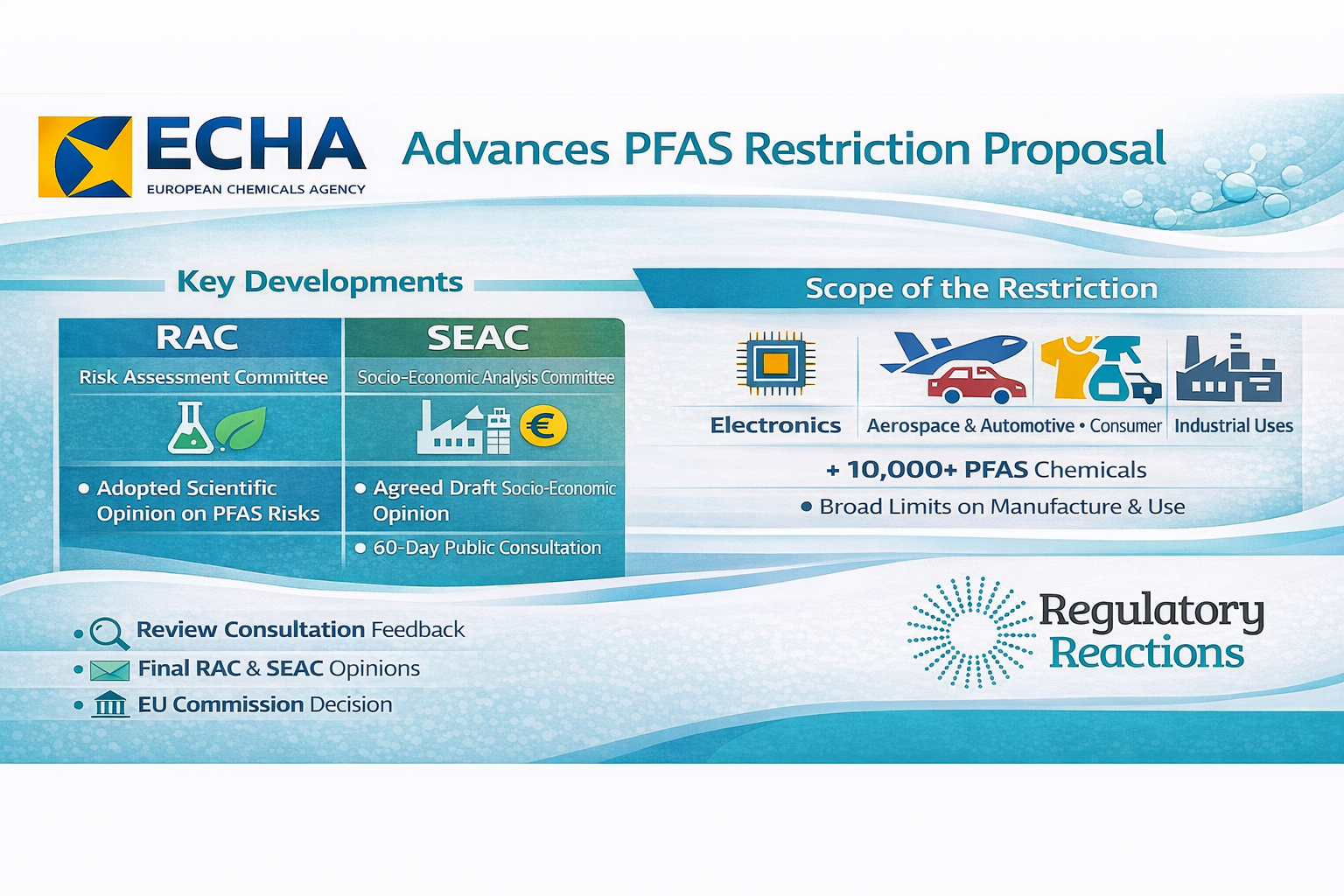
EU PFAS ban moves forward as ECHA committees issue key opinions
ECHA advances EU PFAS restriction as RAC adopts its opinion and SEAC agrees draft socio-economic assessment for consultation.
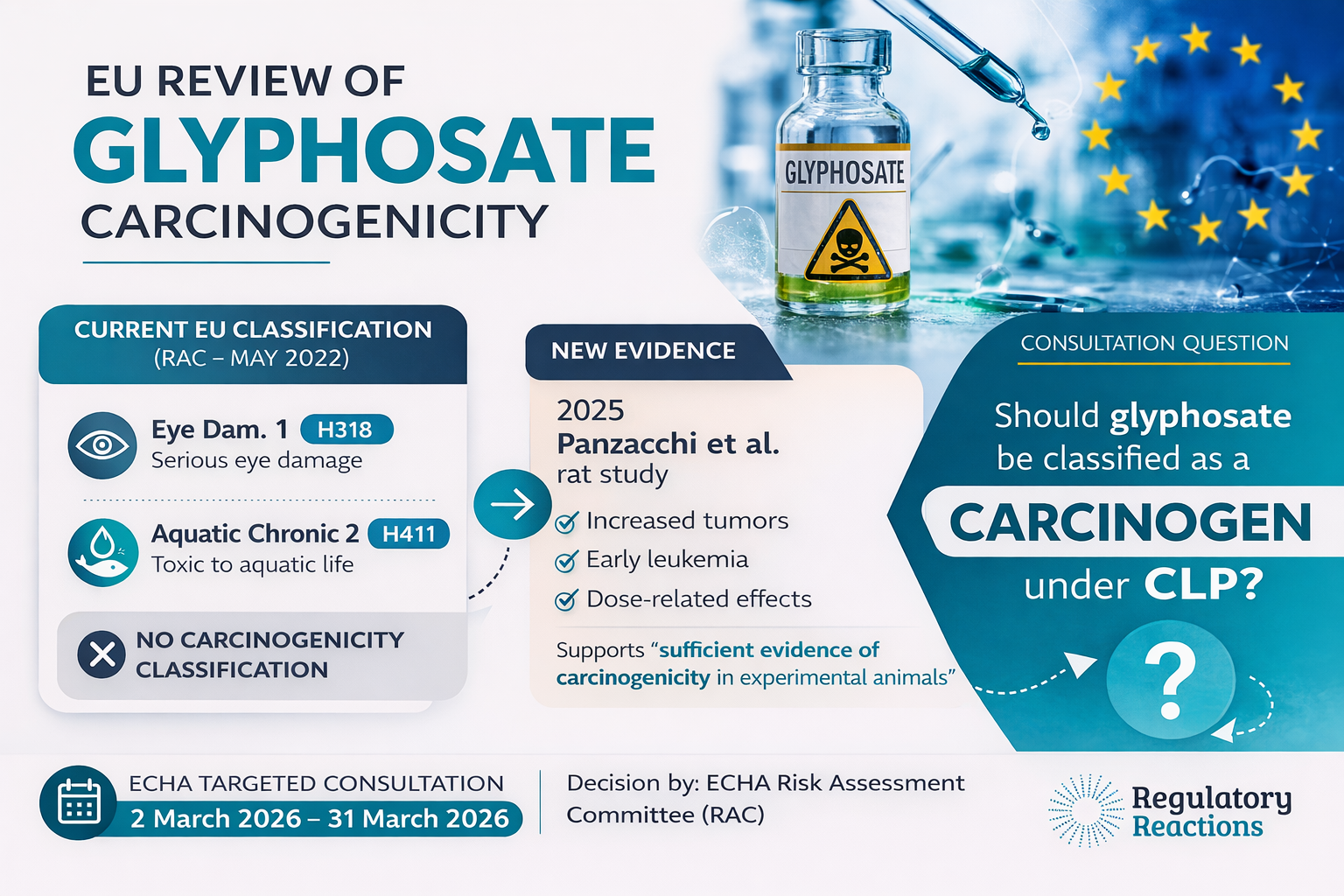
New rat study triggers ECHA to review its previous CLP classification for glyphosate
ECHA launches a consultation, ending on 31 March 2026, on CLP classification of glyphosate after a 2025 rat study reporting tumors challenges RAC’s 2022 finding of no carcinogenicity.
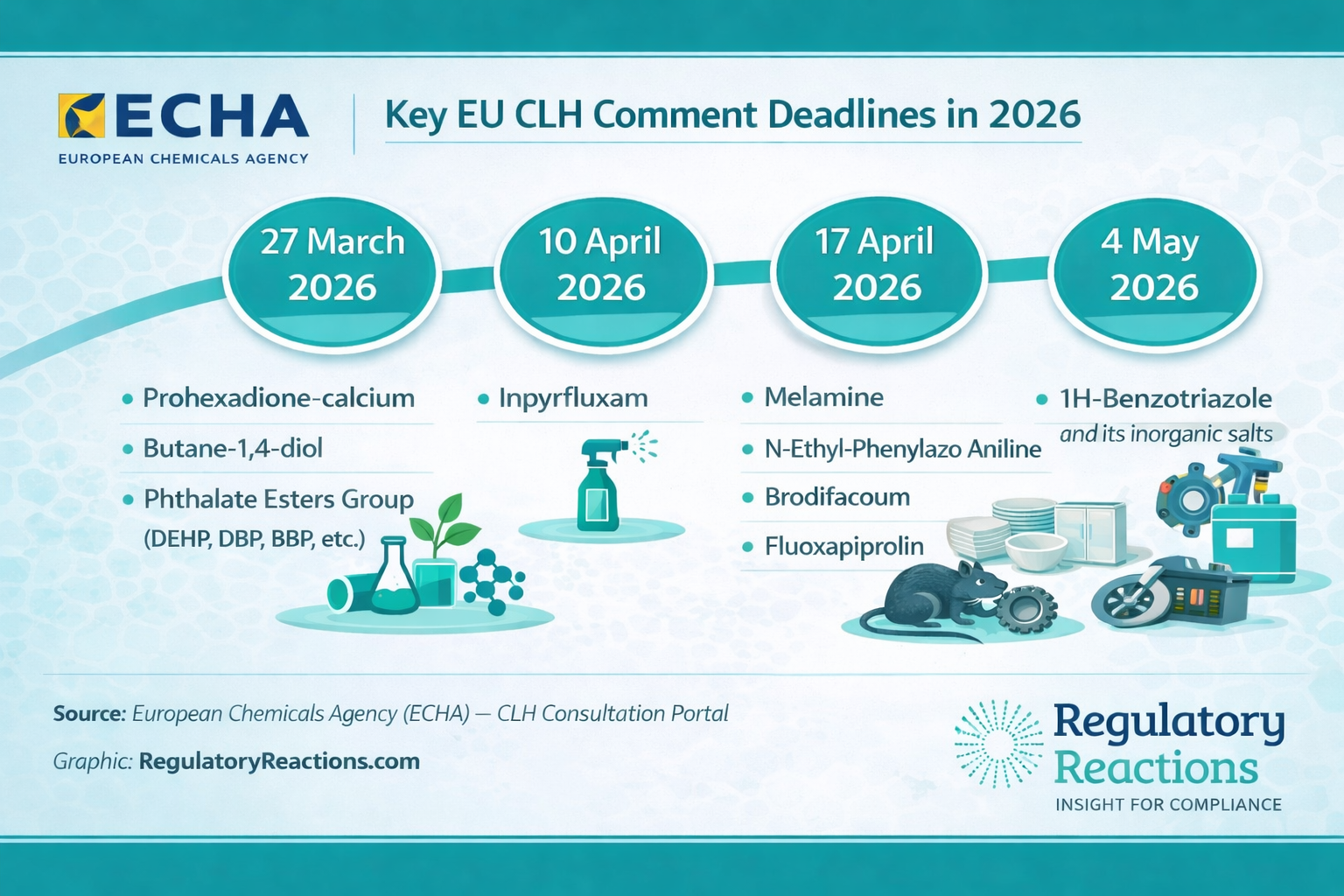
ECHA opens CLH consultations for chemicals including butane-1,4-diol, melamine, and ortho-phthalates
ECHA opened CLH consultations for melamine, 1H-benzotriazole, brodifacoum, fluoxapiprolin and several ortho-phthalates, with comment deadlines from end of March through May 2026.
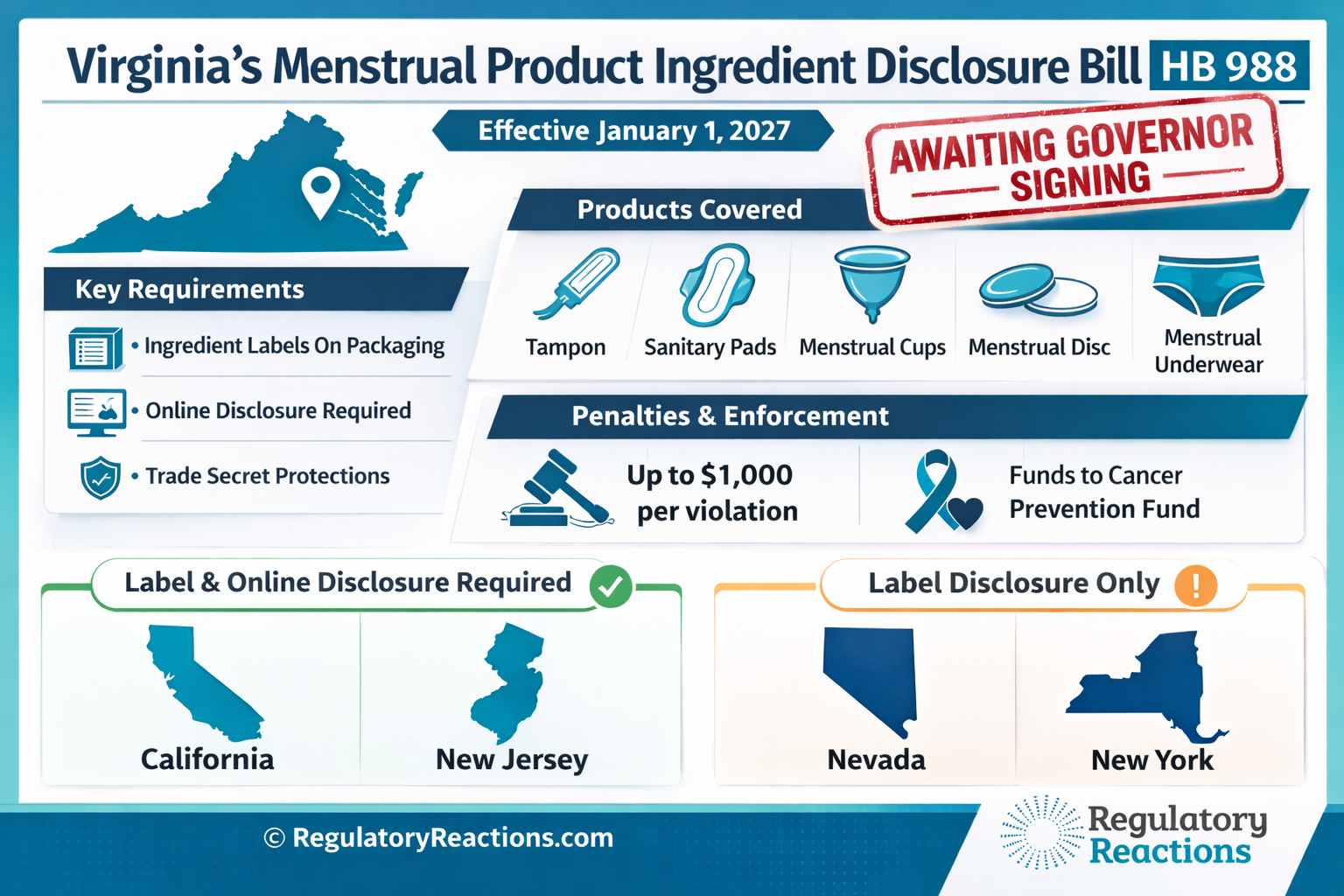
Virginia poised to join states requiring ingredient disclosure for menstrual products
Virginia’s bill — HB998 — that would require menstrual product ingredient disclosure on packaging and online now awaits the governor’s signature. If signed, the law takes effect January 1, 2027.
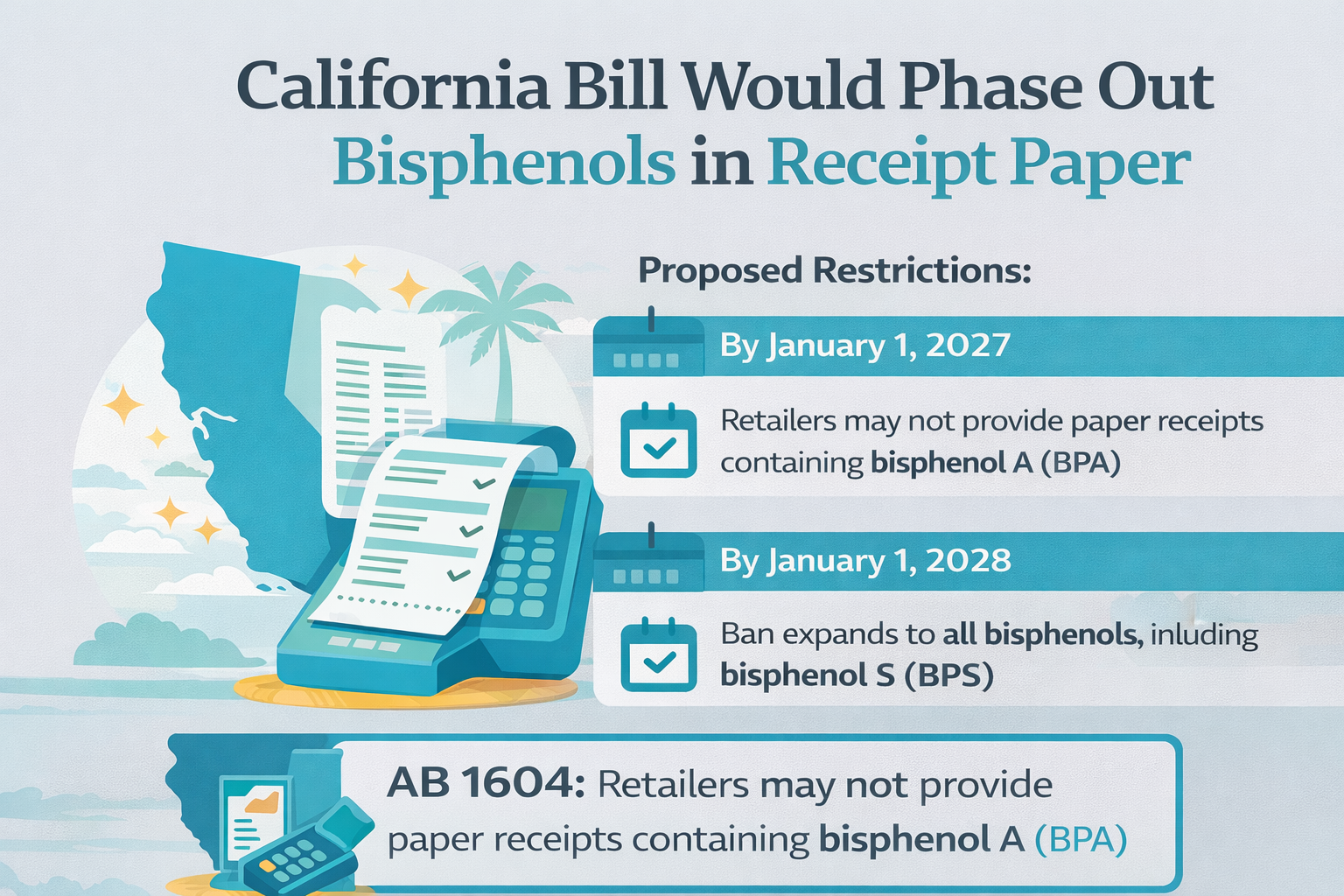
California Moves to Phase Out Bisphenols in Paper Receipts Under AB 1604
California’s AB 1604 would phase out bisphenols in thermal receipt paper, banning BPA in 2027 and expanding the restriction to all bisphenols by 2028.
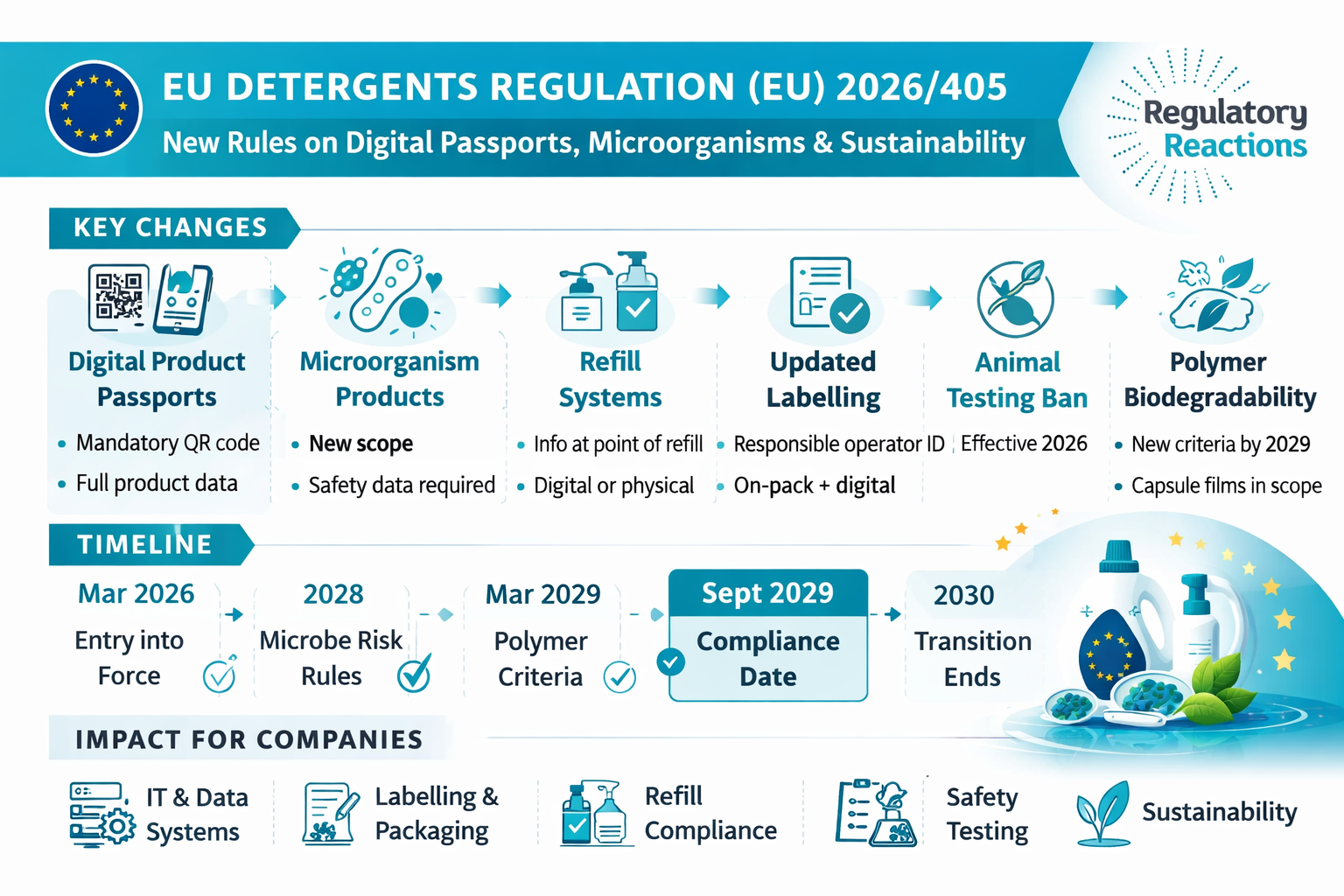
EU overhauls detergent rules, requiring Digital Product Passports, banning animal testing, expanding product types and biodegradability criteria for polymer films
EU adopts Regulation (EU) 2026/405 replacing the 2004 Detergents Regulation, introducing digital product passports and new compliance rules.
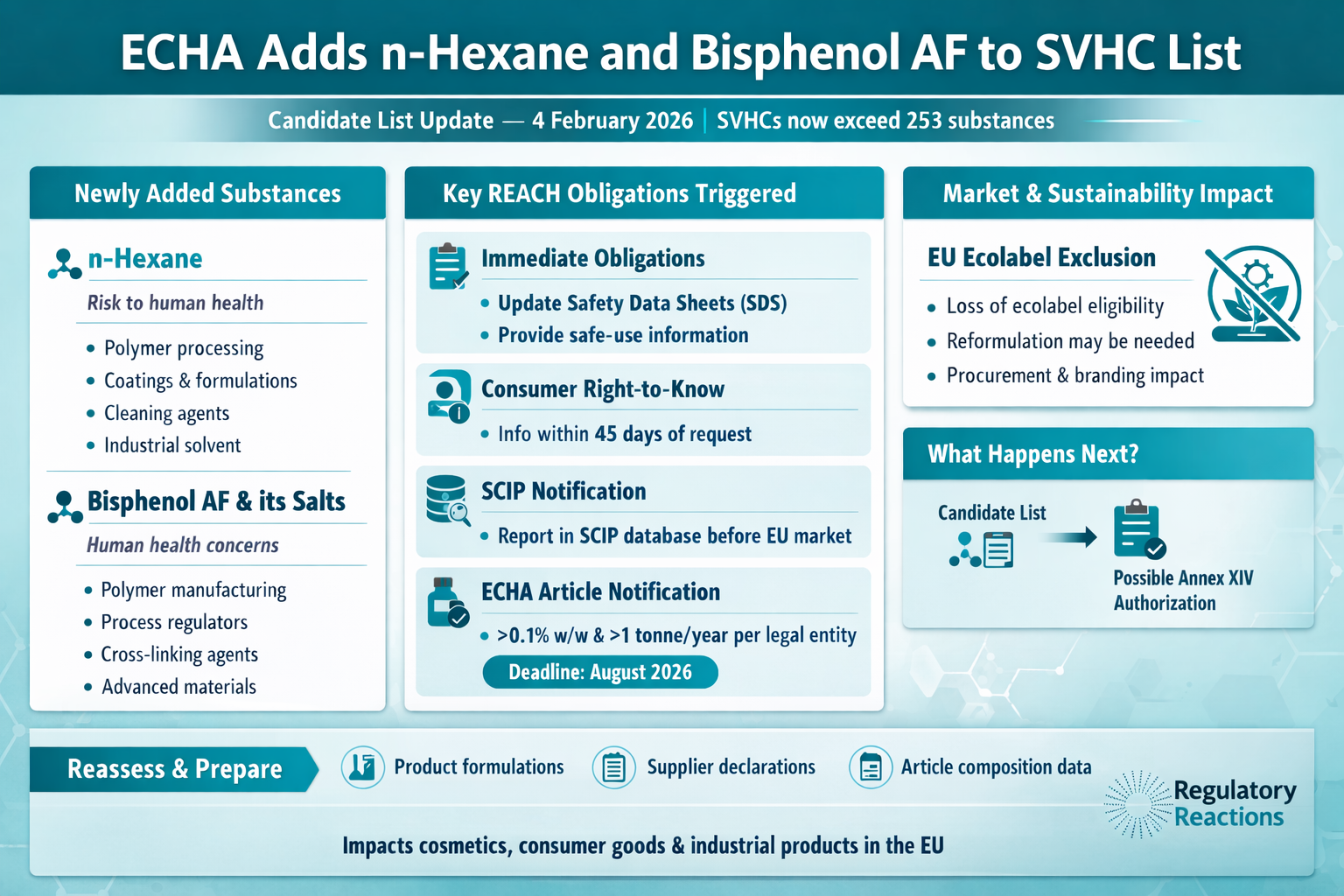
ECHA added n-Hexane and Bisphenol AF to the SVHC list
ECHA adds N-Hexane and Bisphenol AF to the EU SVHC List, triggering immediate compliance duties for downstream users and product brands containing the chemicals
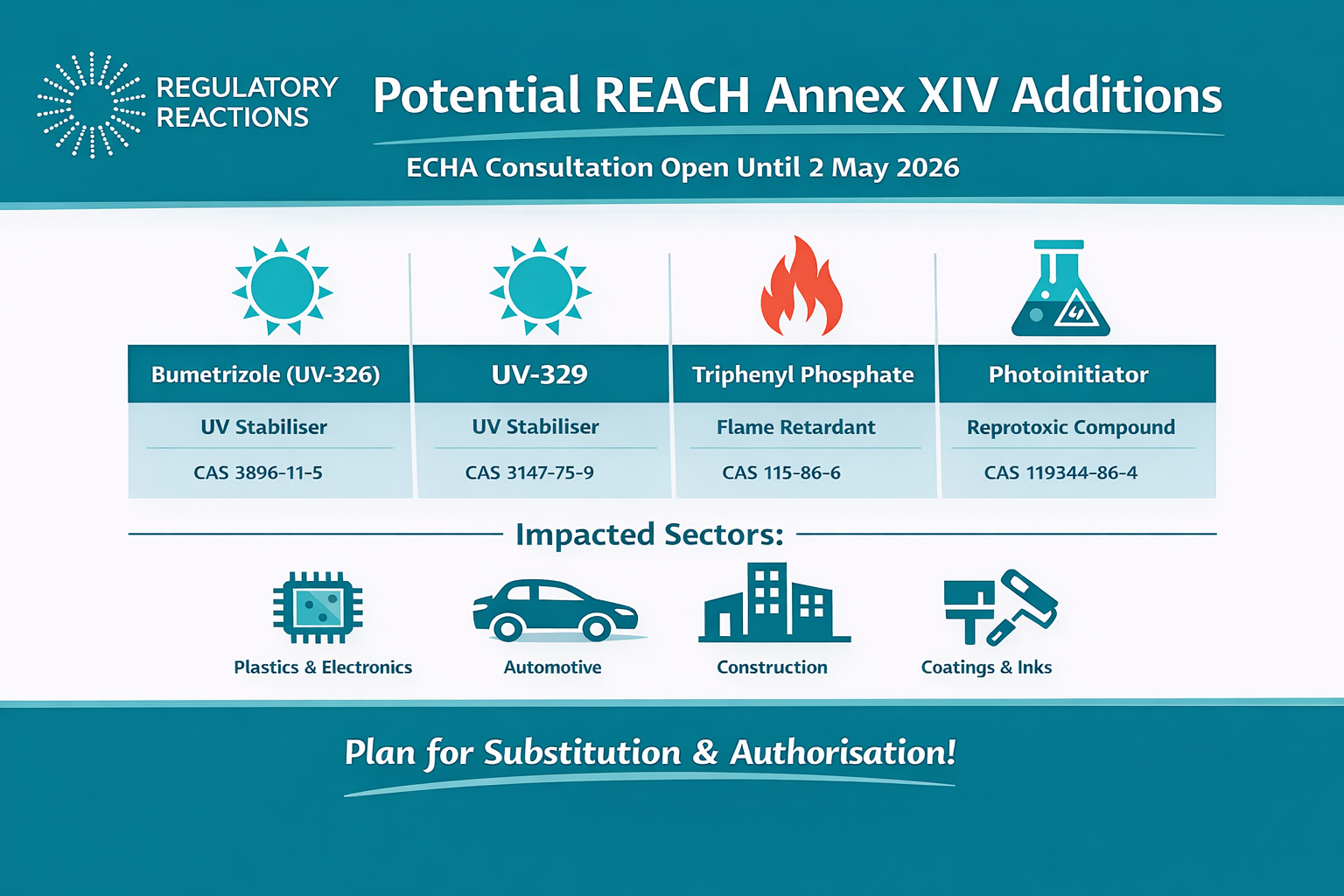
ECHA proposes to phase out four substances
ECHA consults on adding four SVHCs to to the Authorization list (UV-326, UV-329, Triphenyl phosphate, 2-(dimethylamino)-2-[(4- methylphenyl)methyl]-1-[4- (morpholin-4- yl)phenyl]butan-1-one), signaling the agency’s intention on phasing out the chemicals.
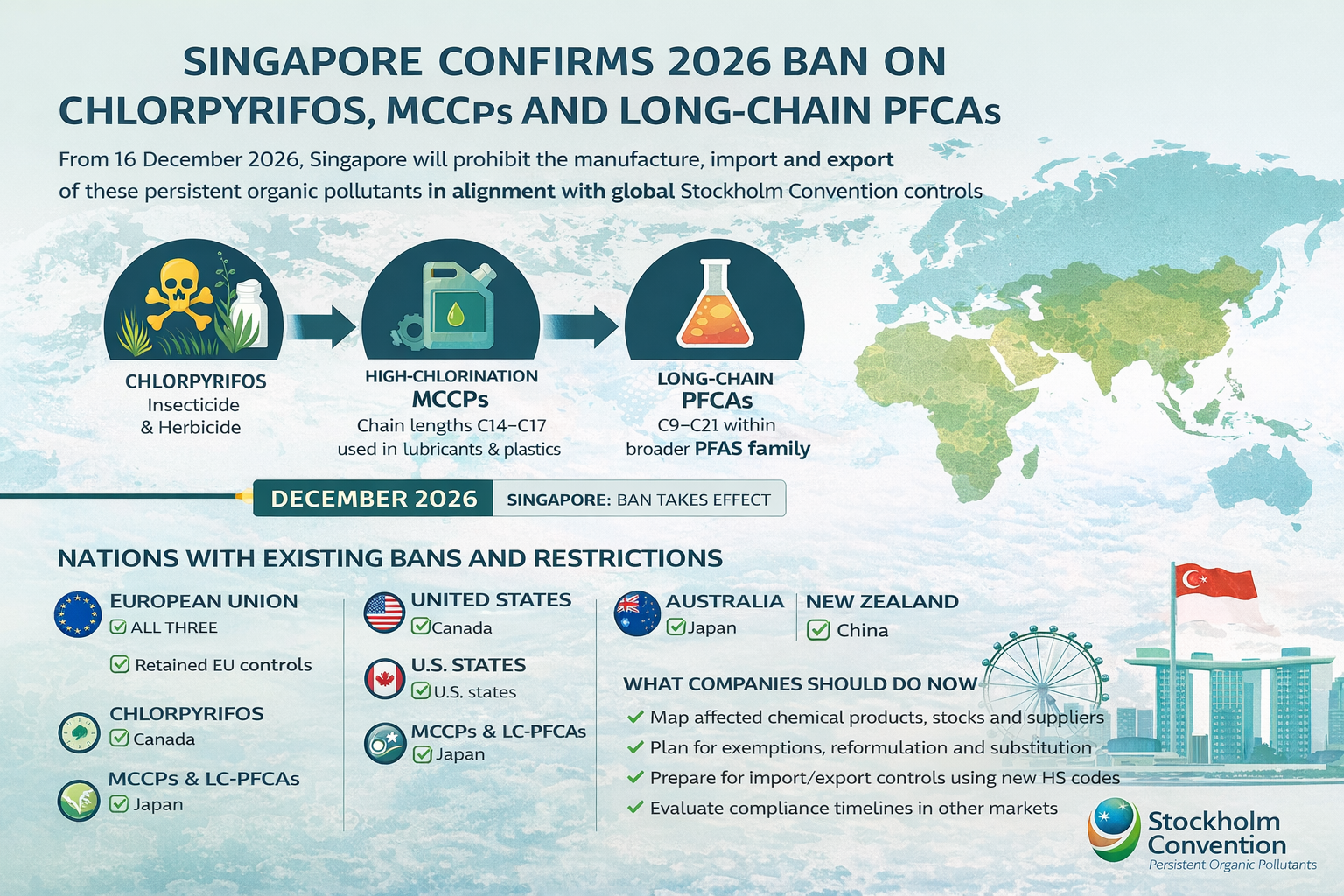
Singapore confirms 2026 ban on Chlorpyrifos, MCCPs and LC -PFCAs under Stockholm Convention
Singapore will ban chlorpyrifos, MCCPs and LC-PFCAs from December 2026, aligning with global Stockholm Convention controls.
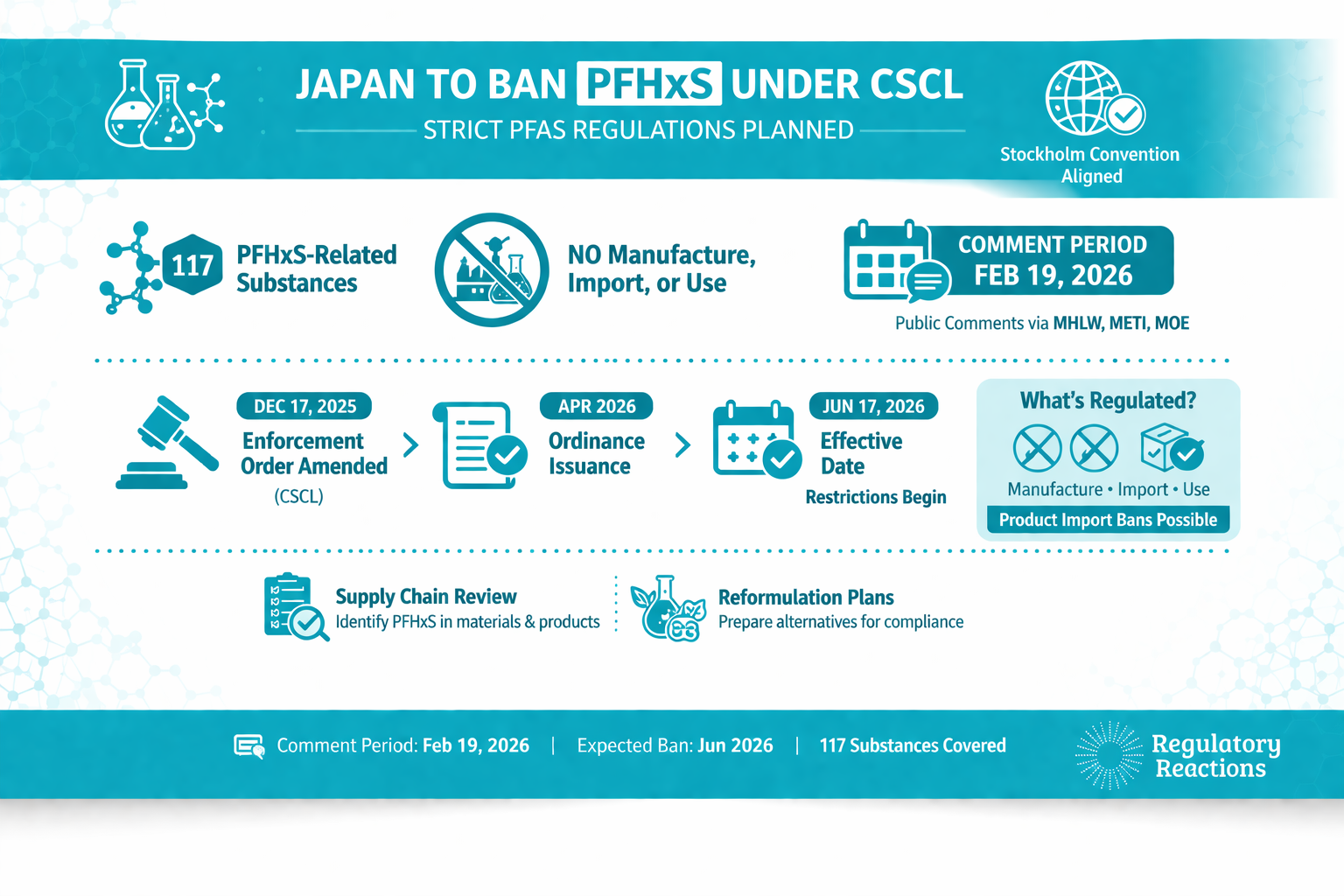
Japan seeks to restrict 117 PFHxS substances under Chemical Substances Control Law
Japan proposes PFHxS ban under CSCL, covering 117 substances, with restrictions on manufacture, import, and use starting June 2026.
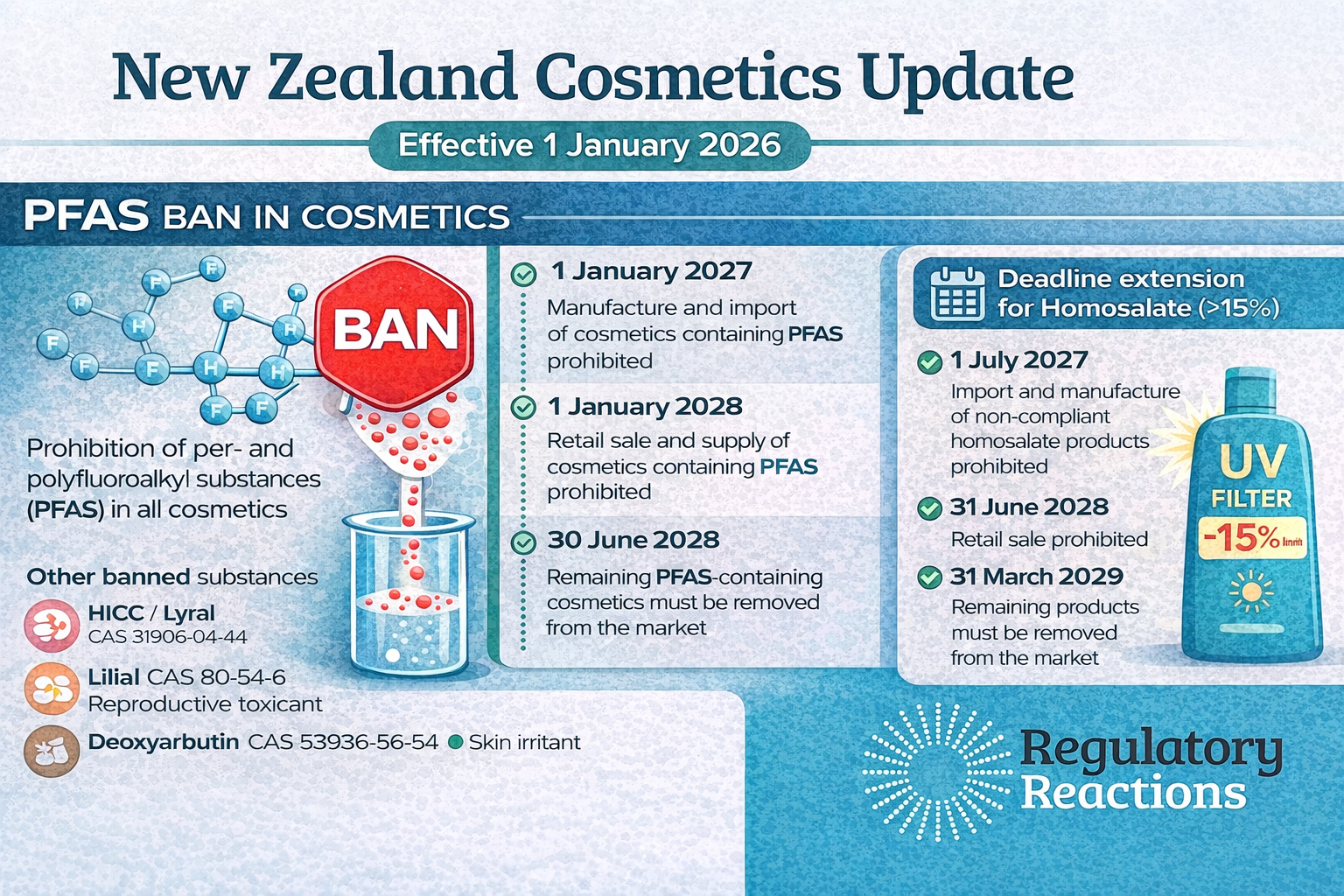
New Zealand phases out PFAS and imposes restrictions on additional chemicals in cosmetic products
New Zealand cosmetics rule revisions took effect 1 January 2026, banning PFAS, lilial, and deoxyarbutin in cosmetics.
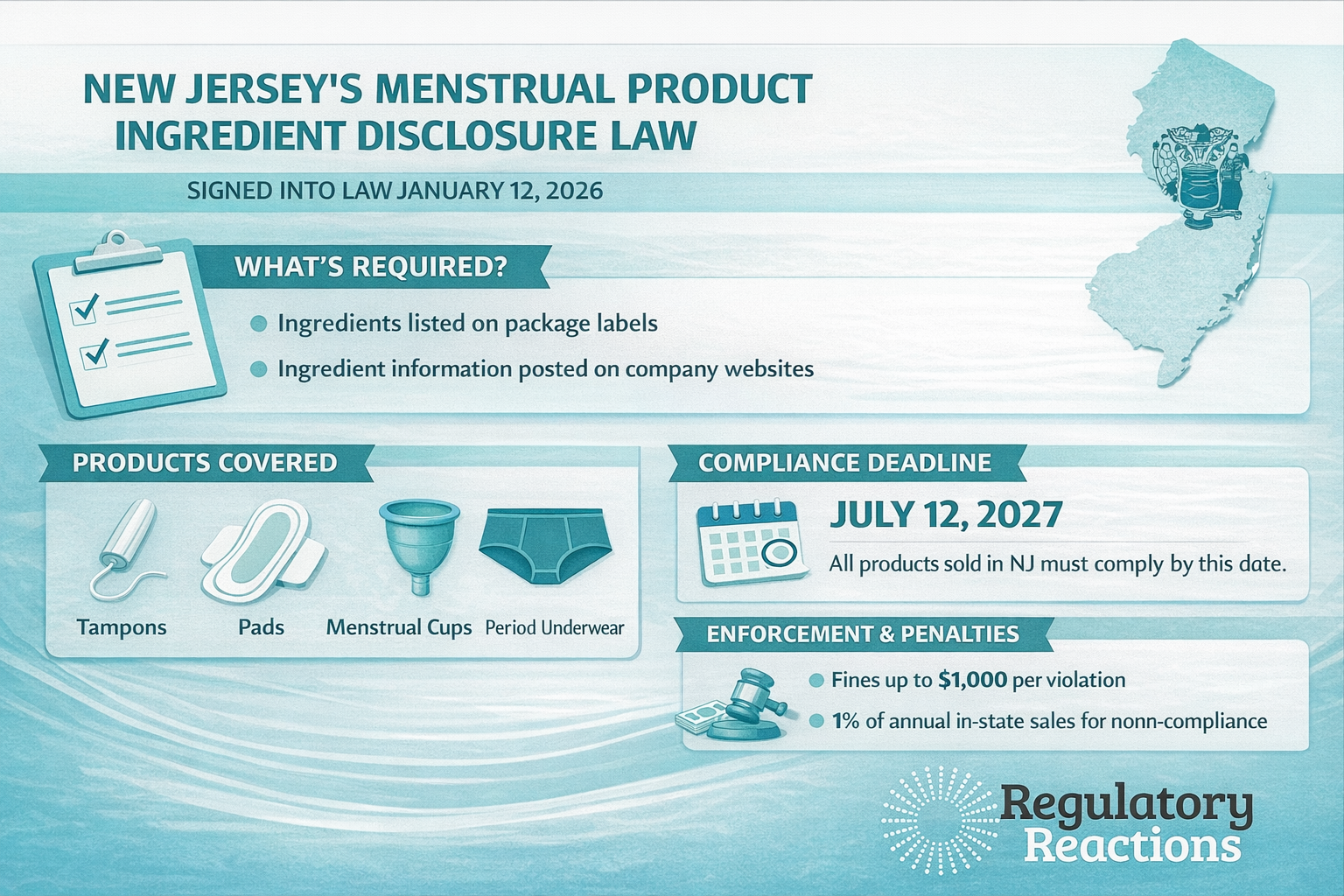
New Jersey requires mandatory ingredient disclosure in menstrual products
New Jersey’s new law requires ingredient disclosure on menstrual product packaging and online. Manufacturers must comply by 12 July 2027.