Filter by jurisdictions
- Asia Pacific 19
- Australia 3
- Brazil 1
- California 3
- China 1
- Denmark 1
- Draft proposal 25
- EU 7
- Europe 11
- Final rules 24
- France 1
- India 1
- Indonesia 1
- Japan 2
- Latin America 3
- Minnesota 2
- New Jersey 2
- New Mexico 1
- New York 3
- New Zealand 1
- North America 1
- Oceania 4
- Peru 2
- Philippines 4
- Singapore 1
- South Korea 1
- Southeast Asia 9
- Taiwan 2
- UK 3
- US federal 2
- US states 13
- Ukraine 1
- United States 15
- Vietnam 3
- Virginia 1
- Washington D.C. 1
- Washington state 1

Minnesota PFAS Reporting Deadline Nears as Extension and Waiver Requests Close August 16
Manufacturers selling products in Minnesota face an August 16, 2026, deadline to mail requests for additional reporting time or a waiver, followed by the September 15 deadline for submitting PFAS-in-products reports.
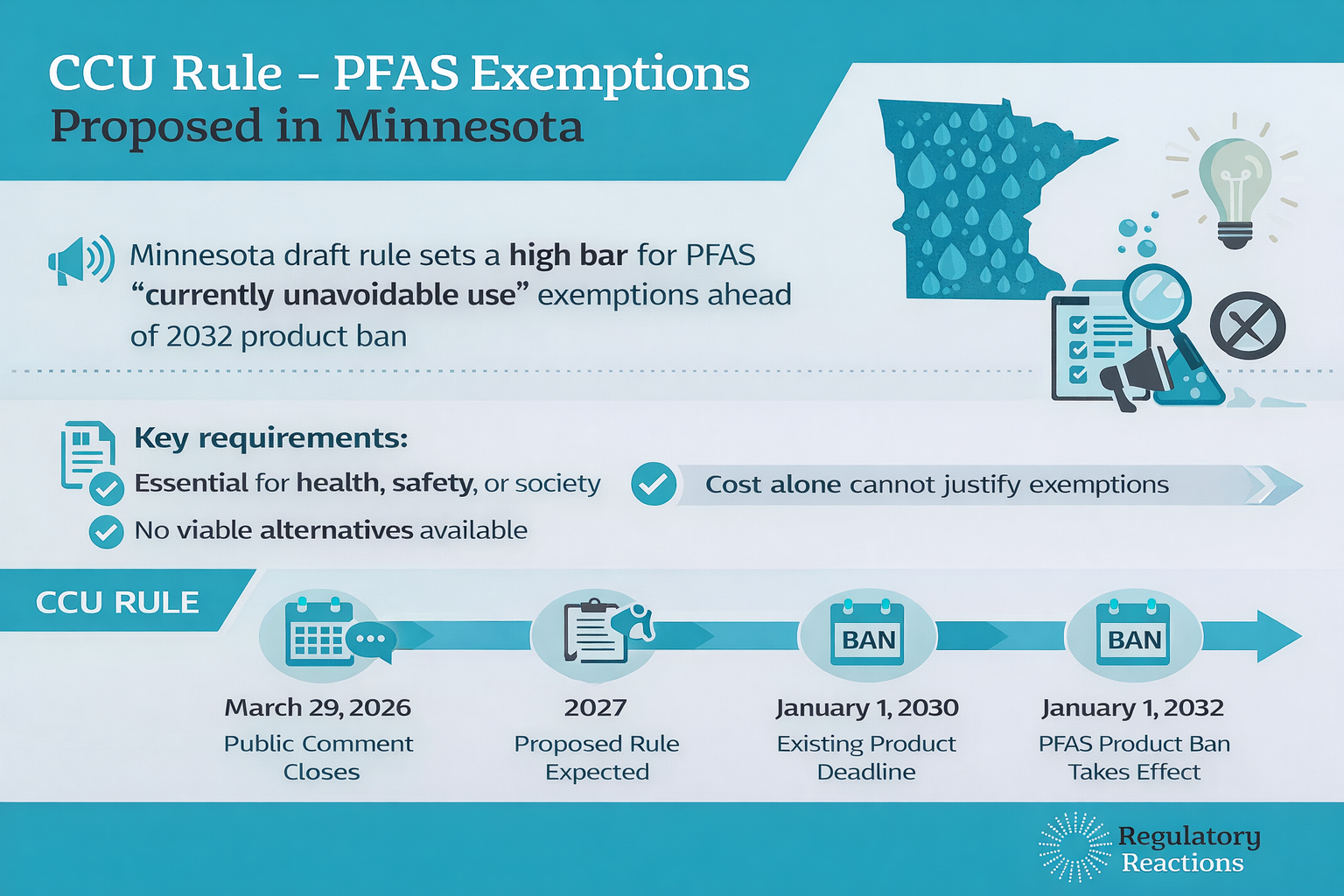
Public comment period is ending for Minnesota’s “unavoidable use” rule for exempting PFAS prohibition
Minnesota advances PFAS exemption rule, detailing CUU waivers, timelines, and key industry questions ahead of the 2032 ban.
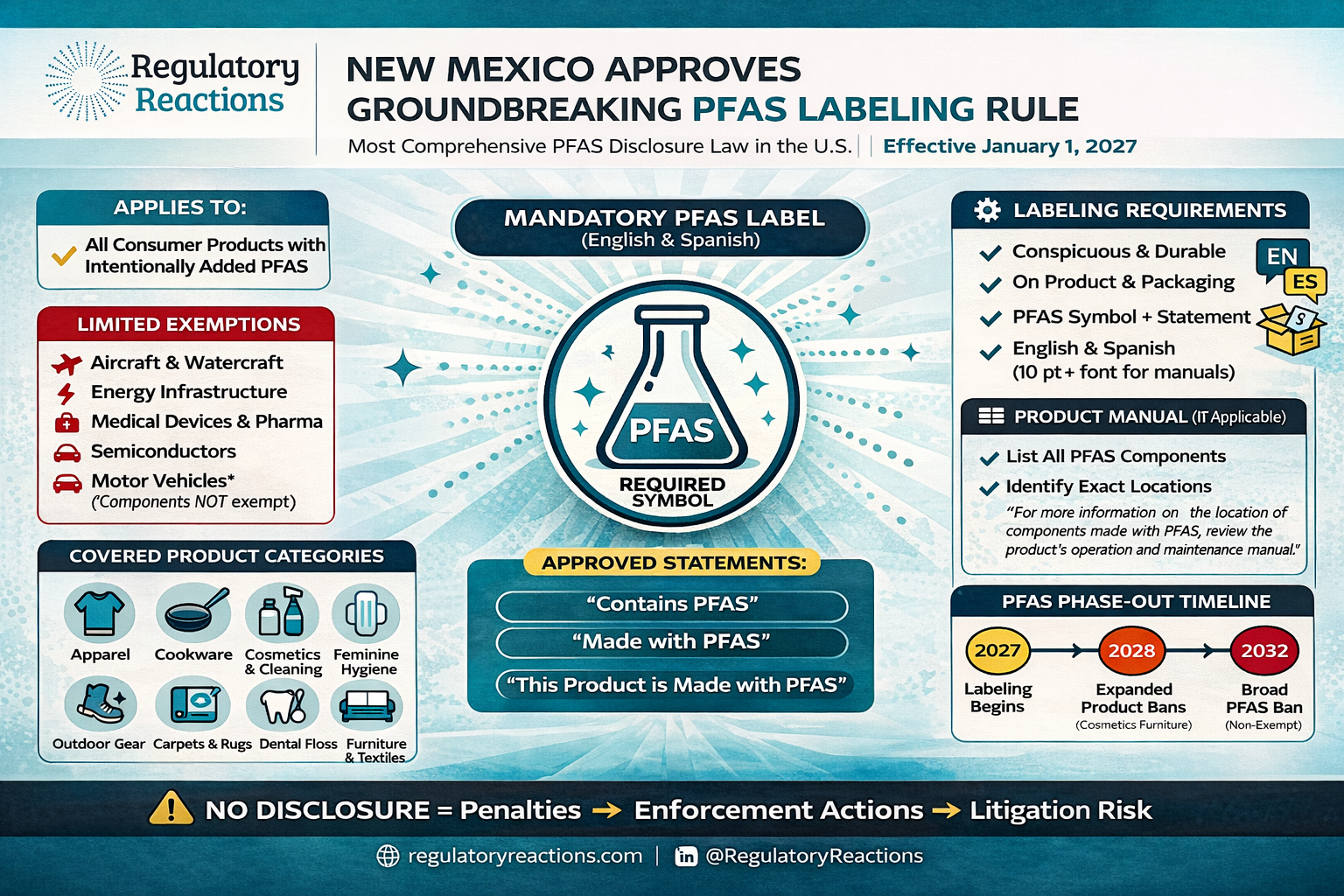
New Mexico approves sweeping PFAS Labeling Rule for Consumer Products
New Mexico mandates PFAS labels on most consumer products by 2027, creating the most comprehensive U.S. disclosure framework.
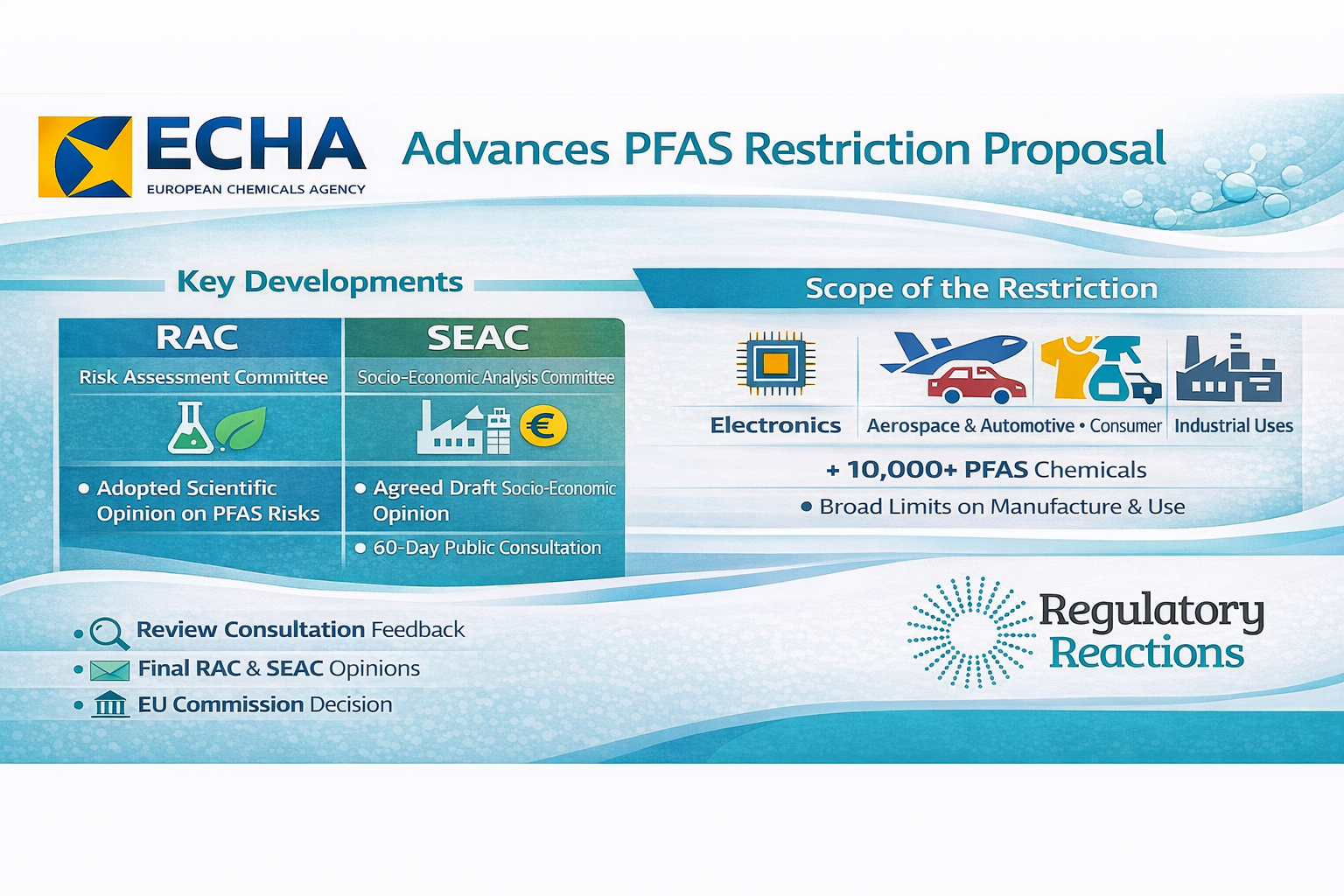
EU PFAS ban moves forward as ECHA committees issue key opinions
ECHA advances EU PFAS restriction as RAC adopts its opinion and SEAC agrees draft socio-economic assessment for consultation.
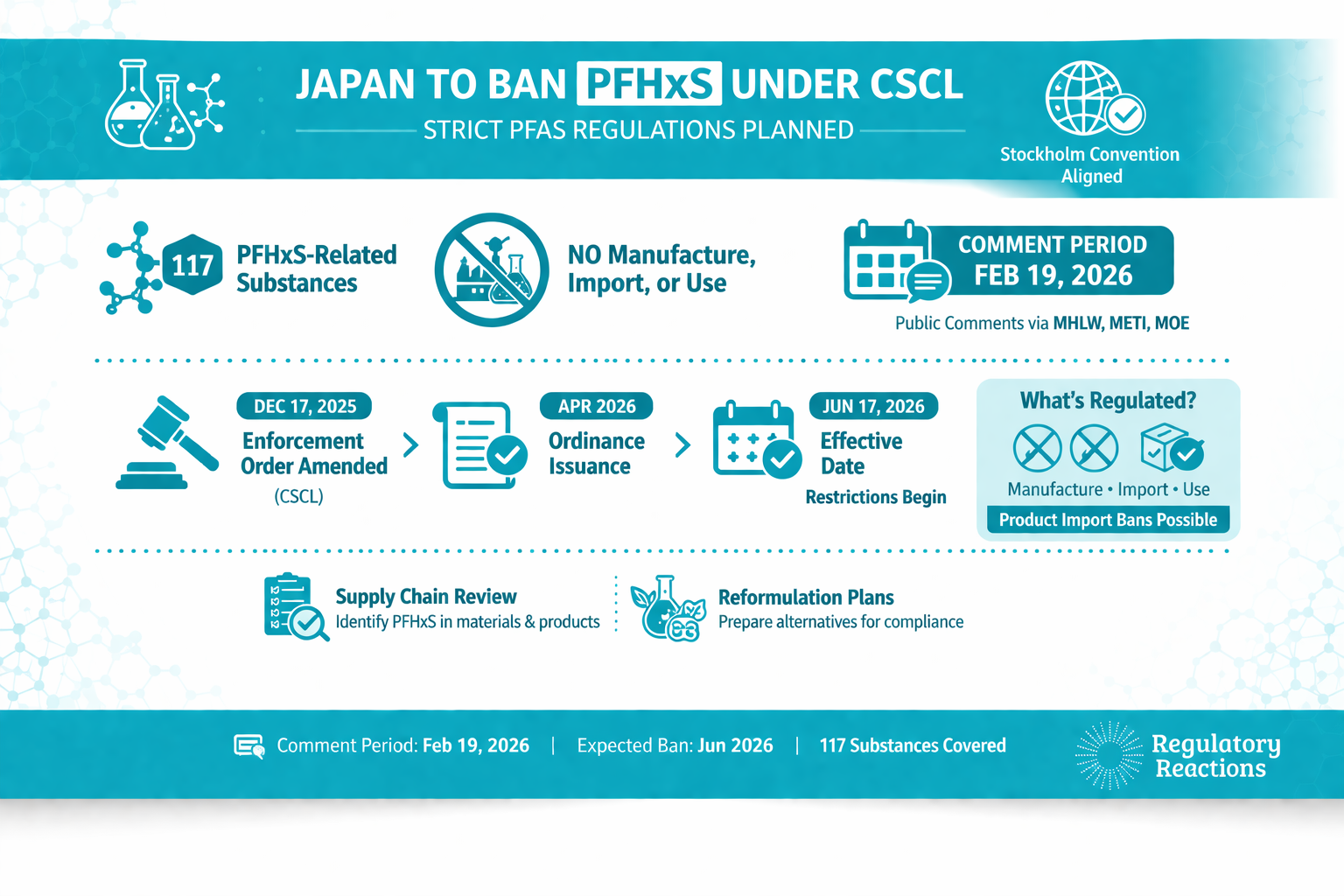
Japan seeks to restrict 117 PFHxS substances under Chemical Substances Control Law
Japan proposes PFHxS ban under CSCL, covering 117 substances, with restrictions on manufacture, import, and use starting June 2026.
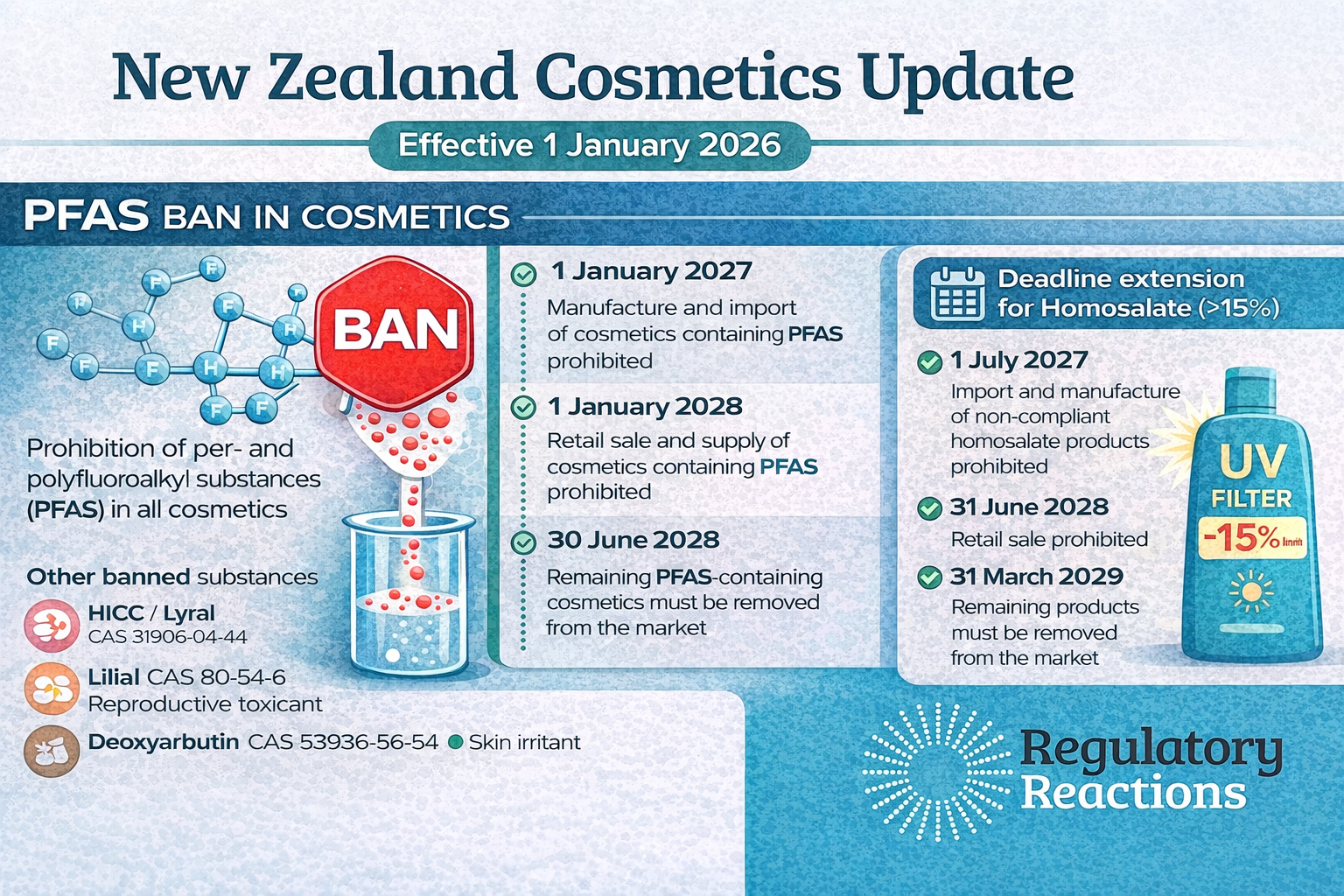
New Zealand phases out PFAS and imposes restrictions on additional chemicals in cosmetic products
New Zealand cosmetics rule revisions took effect 1 January 2026, banning PFAS, lilial, and deoxyarbutin in cosmetics.
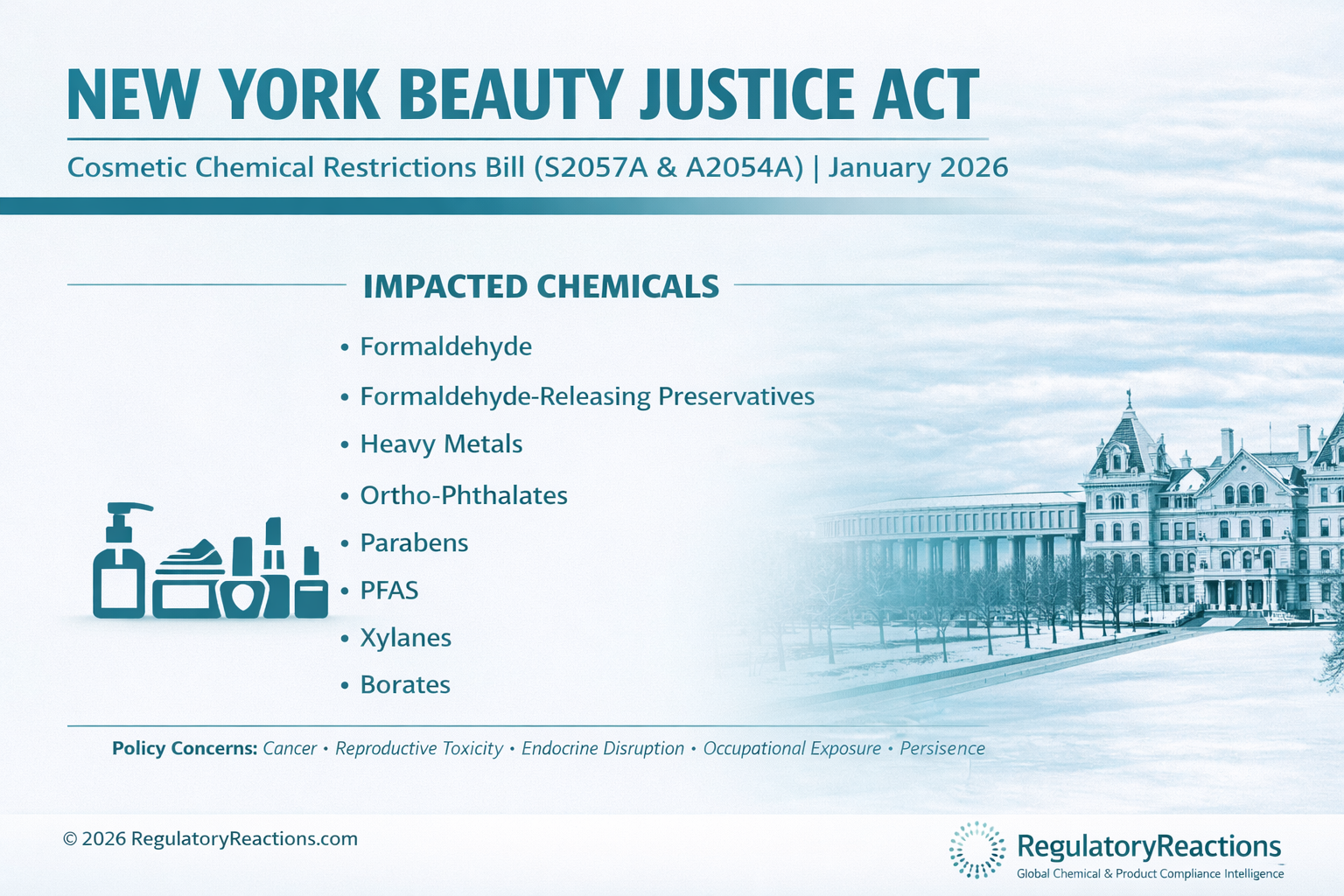
New York’s Beauty Justice Act is given new life
New York advances proposed Beauty Justice Act to restrict toxic chemicals (borates, formaldehyde, orthophthalates, parabens, PFAS, xylanes) in cosmetics.
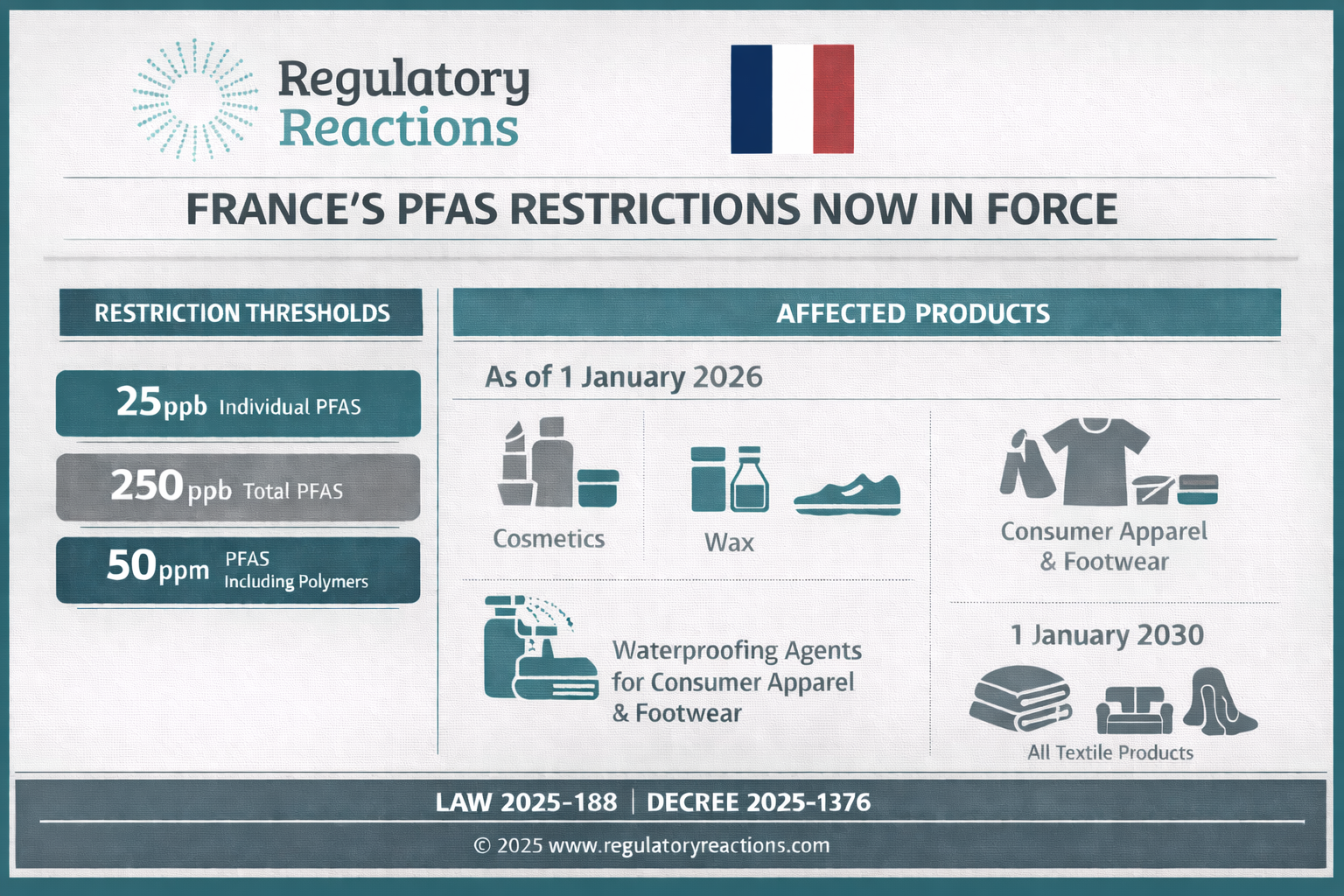
France implements measurable PFAS limits across cosmetics, textiles, wax
France’s PFAS law now in force sets strict product bans and measurable limits for cosmetics, consumer apparel & footwear, wax, and textiles.
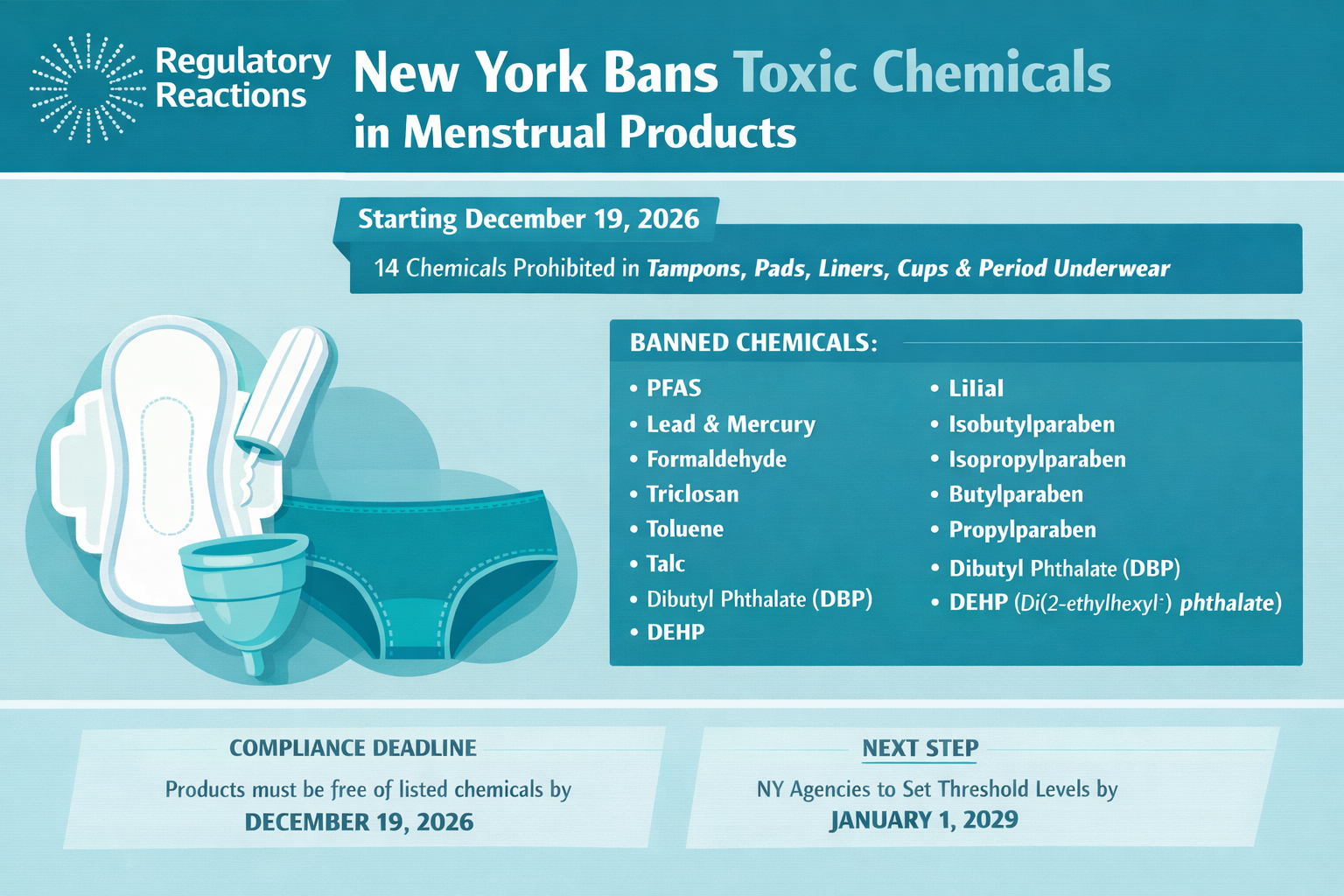
New York bans PFAS, parabens, phthalates, talc and other chemicals in menstrual products
New York bans PFAS, lead, mercury, formaldehyde, phthalates, parabens, and talc in menstrual products by Dec 2026.
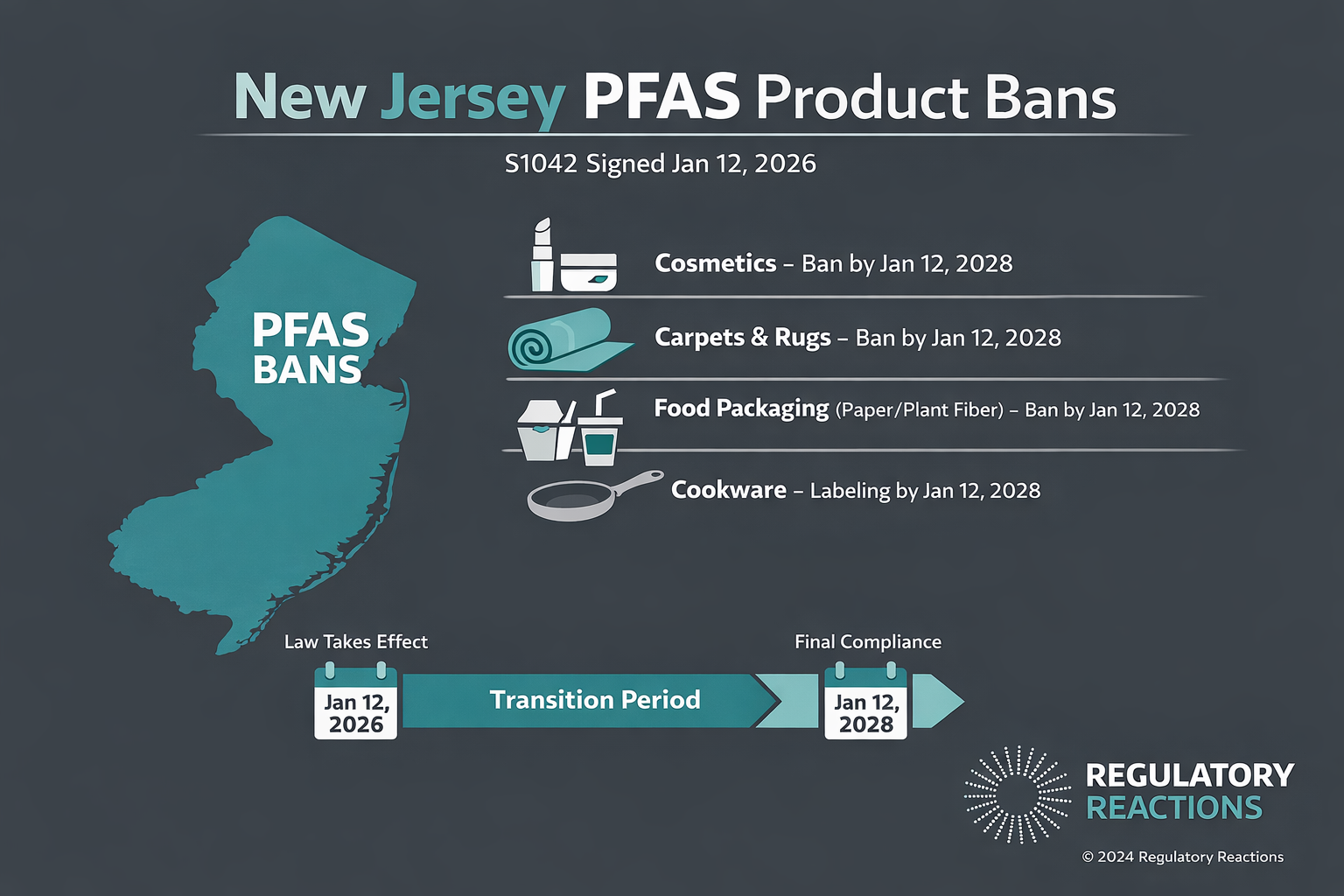
New Jersey moves against PFAS: cosmetics, carpets and food packaging face 2028 Ban
New Jersey Moves Against PFAS: Cosmetics, Carpets and Food Packaging Face 2028 Ban
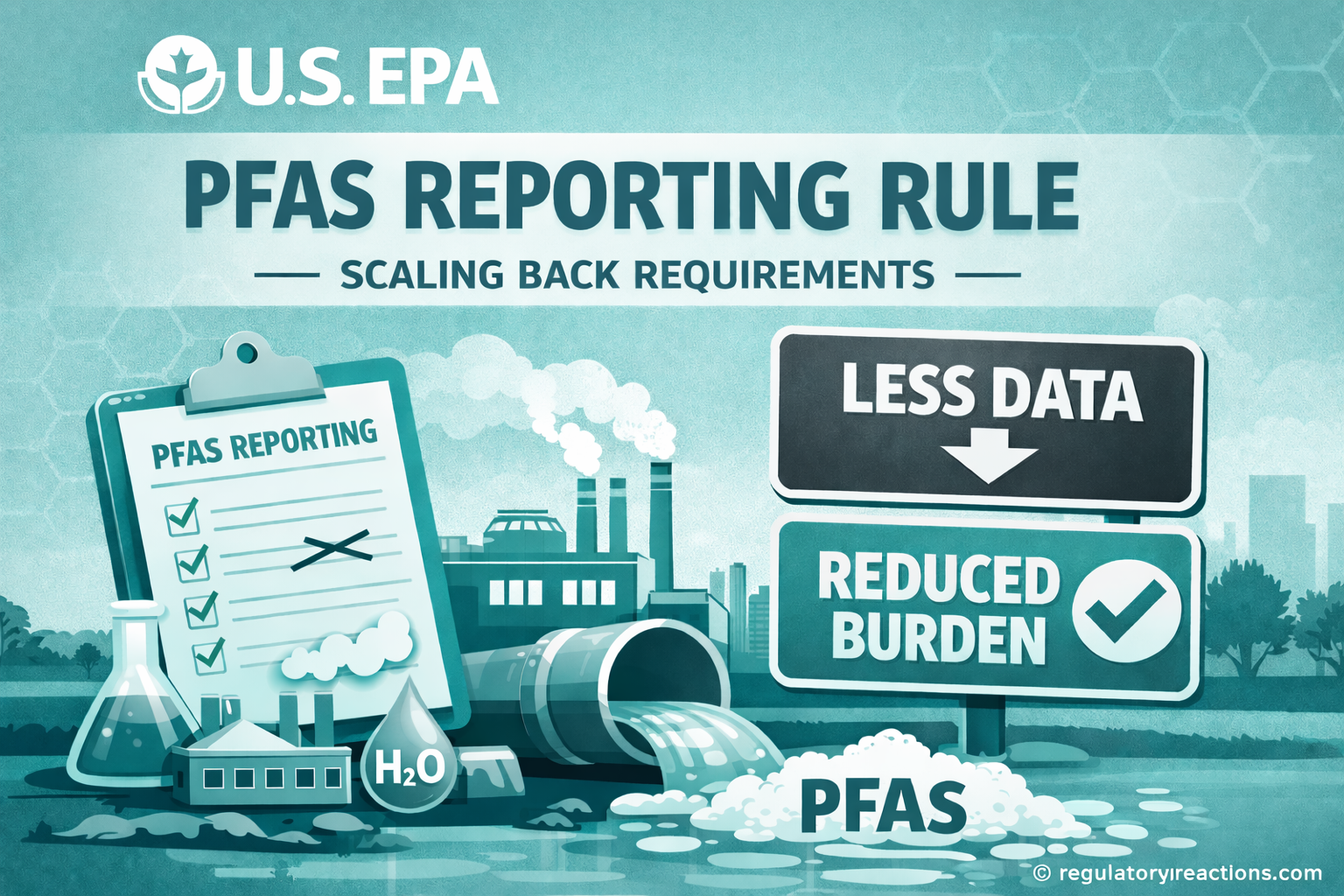
US EPA Moves to Scale Back PFAS Reporting Rule for Products
The U.S. Environmental Protection Agency (EPA) has proposed to narrow PFAS reporting obligations under TSCA, offering long-anticipated exemptions for imported articles, impurities, byproducts, and PFAS below 0.1%. The agency is also considering raising the de minimis threshold to 1% and possibly shifting from a structural PFAS definition to a discrete list of named substances.

Indonesia to restrict PFAS and Bisphenol in food packaging
BPOM has completed consultation on a new regulation updating substance limits in food-contact materials — set to replace Regulation 20/2019. The draft regulation sets to limit the use of Bisphenol A, S and PFAS in food packaging.
NY’s bill on producer responsibilities for packaging materials face uncertain fate amidst opposition from industries
The New York Senate passed S1464 on 28 May 2025, which seeks to implement extended producer responsibilities (EPR) for packaging and packaging materials. The the bill would require companies to register with the state, create collection systems and take back programs as well as eliminate hazardous chemicals from packaging and packaging materials.
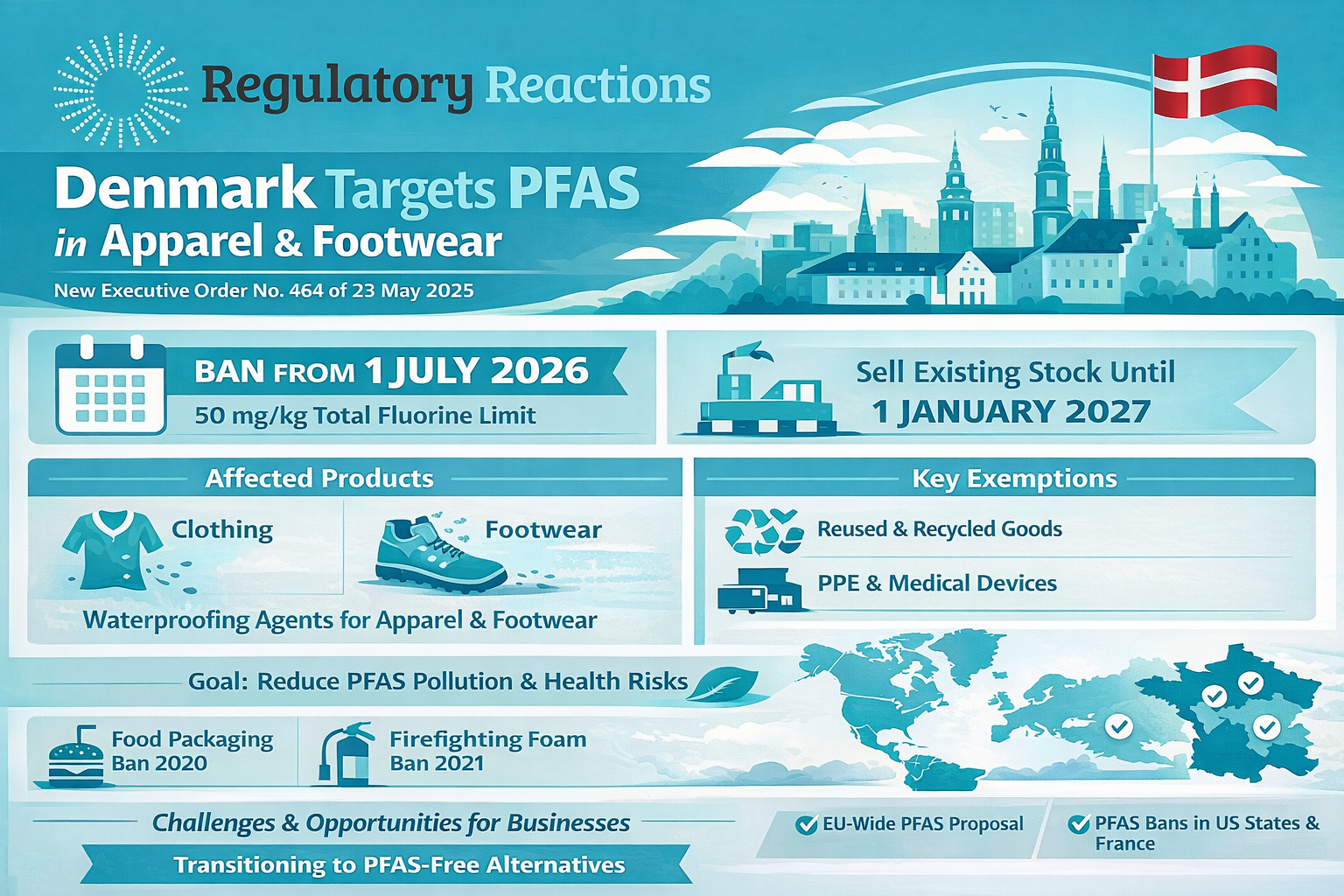
Denmark targets PFAS in apparel, footwear and waterproofing agents under new executive order
Denmark bans PFAS in clothing, footwear and waterproofing agents from July 2026 as global textile PFAS restrictions rapidly expand.
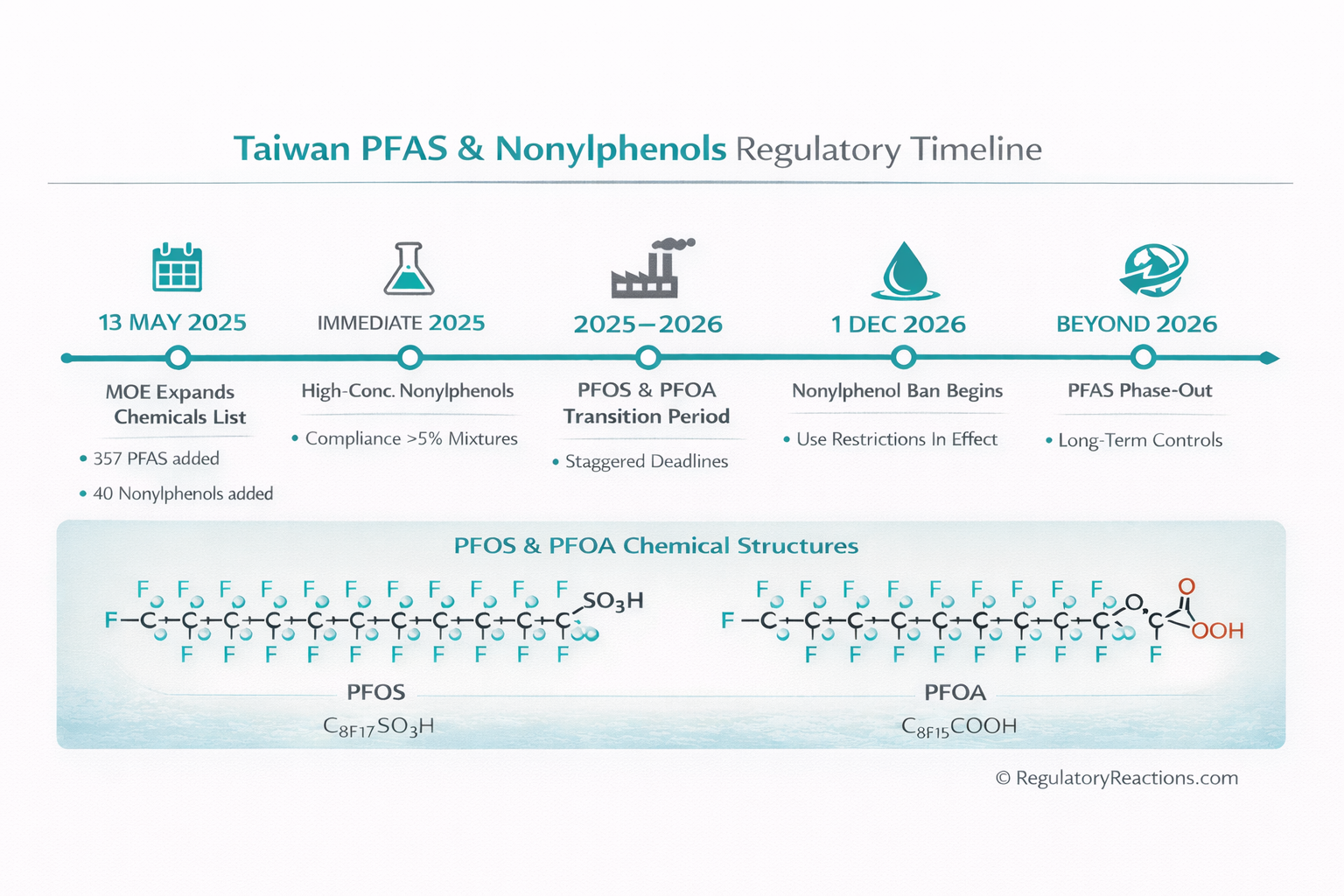
Taiwan’s restrictions on PFOA, PFOS, and nonylphenols substances take effect soon
Taiwan’s restrictions for the 397 PFAS substances, which it consulted with the public in October 2024, and Nonylphenols will take effect starting on 1 June 2025. Industries have a short transition period to comply with the new restrictions.