
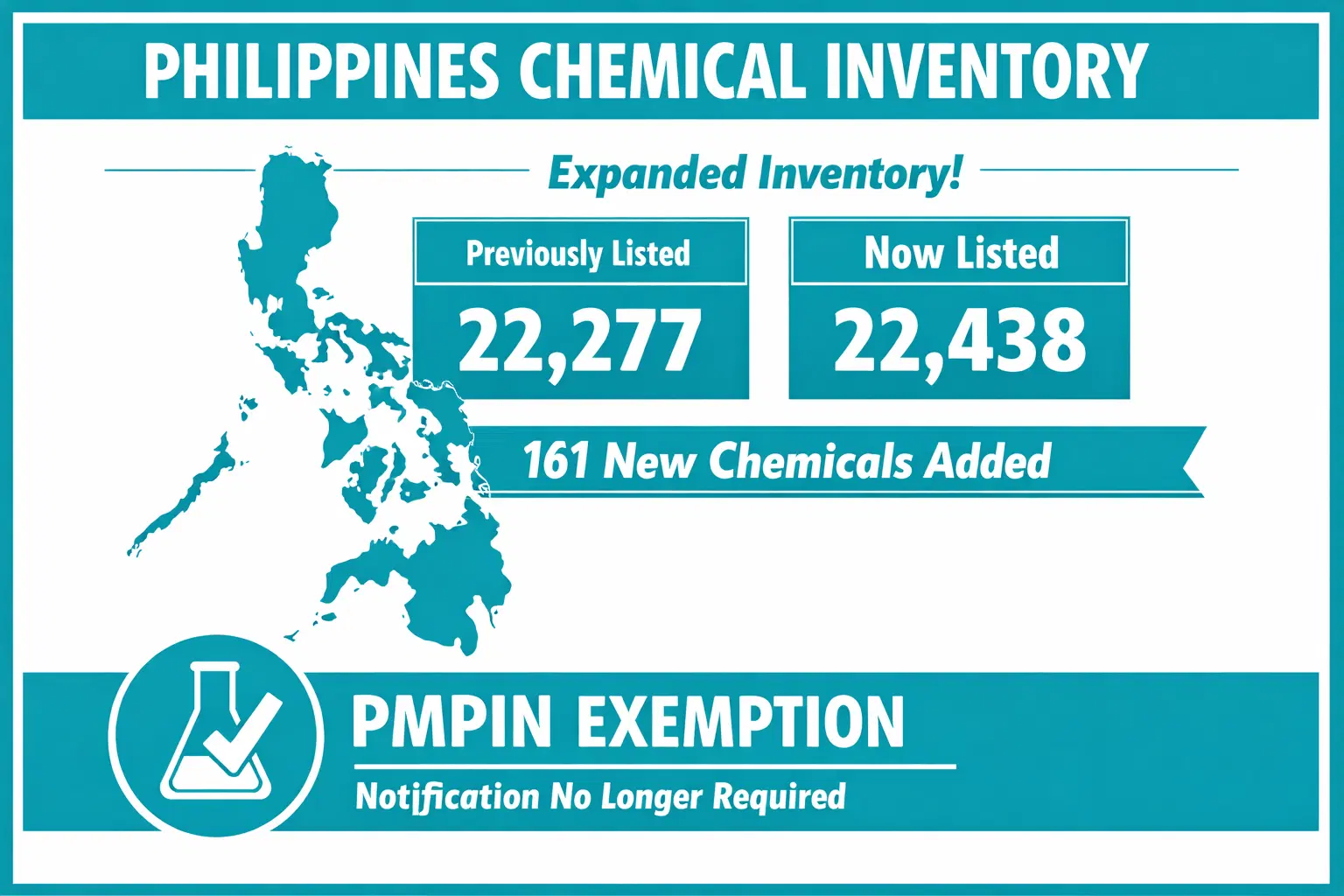
Manila, Philippines, January 2025 - The Environmental Management Bureau (EMB) has taken another step toward streamlining chemical oversight by expanding its national chemical inventory, lifting notification requirements for more than 160 substances.
In January 2025, the bureau added 161 chemicals to the Philippine Inventory of Chemicals and Chemical Substances, commonly known as PICCS. The additions bring the total number of listed chemicals to 22,438, up from 22,277. All of the newly listed substances were previously notified to the agency during fiscal years 2022 and 2023.'
Beginning in February, companies introducing these chemicals into the market in the Philippines are no longer required to submit notifications under the country’s new chemical program. The change streamlines regulatory obligations for manufacturers and importers, though other permitting and control requirements may still apply depending on the substance and its use.
The newly listed chemicals are used across a range of industries, including petroleum refining, cosmetics, fragrances, food packaging and other consumer products. Examples include chromium phosphate, ethoxylated propoxylated 2-ethyl-1-hexanol, sodium L-lactate and titanium dioxide.
The update does not affect chemicals used in articles—such as finished goods where substances are not intended to be released—or chemicals regulated under other product-specific frameworks. Products such as cosmetics, fertilizers, food, pharmaceuticals and pesticides remain subject to oversight by their respective authorities, including the Department of Trade and Industry and the Food and Drug Administration.
To support compliance efforts, the bureau reissued a regulatory flow chart in February to help companies determine whether permits or approvals are required for specific chemicals or products. A full list of chemicals being added to the inventory is available on the agency’s website.