

Lead story
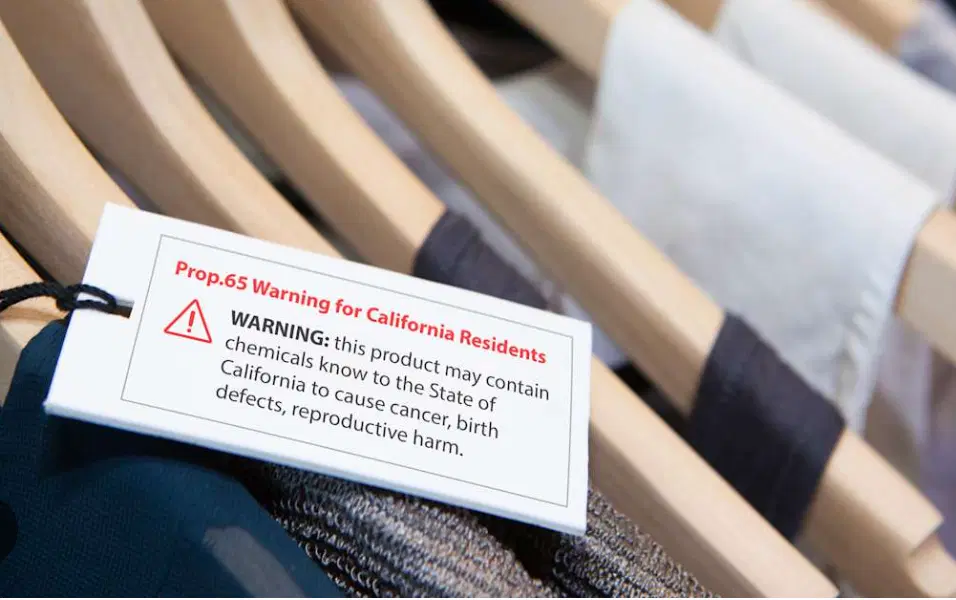
California targets online sales, QR codes, retailer duties, and short-form labeling in a broad Proposition 65 warning overhaul
California is considering broad Proposition 65 warning changes affecting online sales, QR codes, retailer duties, off-road equipment parts and short-form labels. Companies should review the proposals, monitor OEHHA’s position on chemical disclosures and consider commenting before the agency advances formal rulemaking.
Supporting stories

Taiwan proposes controls on six chemicals, targeting food-safety risks, bisphenols, and industrial misuse
Taiwan is proposing new controls on six chemicals, including bisphenol B, bisphenol F, C.I. Pigment Red 3, Para Red, MMMP and GBL, with new approval, reporting, recordkeeping and labelling requirements and compliance deadlines beginning in 2027.
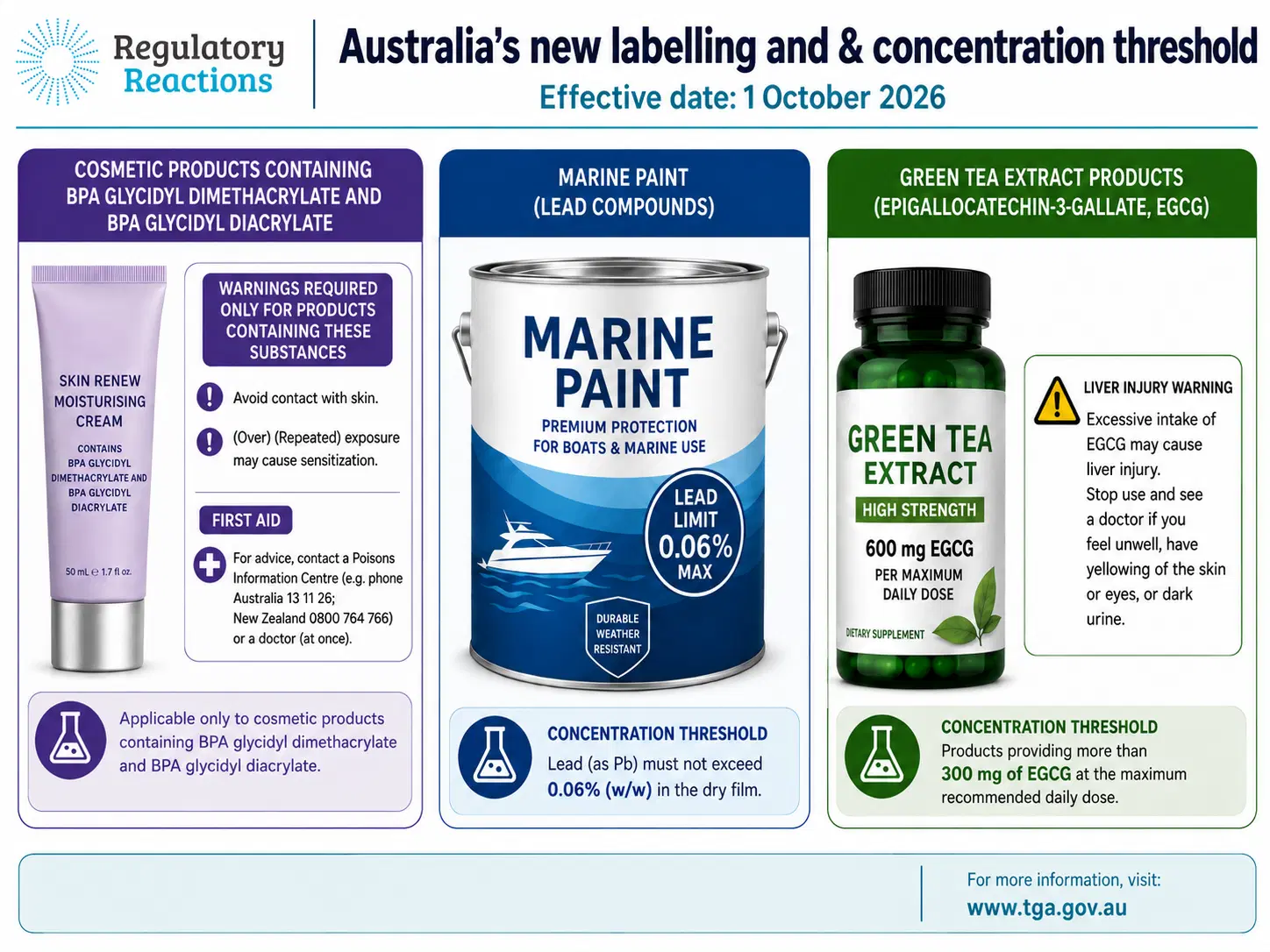
Australia’s compliance deadline hits cosmetics, green tea extracts, and marine paints
Australia’s 1 October 2026 deadline will require new label statements for cosmetics containing BPA glycidyl dimethacrylate or BPA glycidyl diacrylate, liver warnings for high-dose green tea extracts and a lower lead limit for anti-fouling paints.

Also in the News
- 01Brazil adopts long-awaited RoHS framework for electrical and electronic equipment (EEE)Brazil · Jul 22, 2026
- 02Australia tightens controls on retinal as cosmetic safety concerns growAustralia · Jul 20, 2026
- 03Federal court pauses California “Truth in Recycling” compliance deadlineCalifornia · Jul 20, 2026
- 04Philippines adds 81 chemicals to national inventoryPhilippines · Jul 16, 2026
- 05Minnesota PFAS Reporting Deadline Nears as Extension and Waiver Requests Close August 16Minnesota · Jul 16, 2026
- 06Illinois Enacts 2028 Ban on PFAS and Other Chemicals in CosmeticsIllinois · Jul 13, 2026
- 07Peru’s new chemical notification and reporting rules: What companies must knowPeru · Jun 30, 2026
- 08Peru’s New GHS Rules: What companies need to know about classification, labels and safety Data SheetsPeru · Jun 30, 2026
More stories
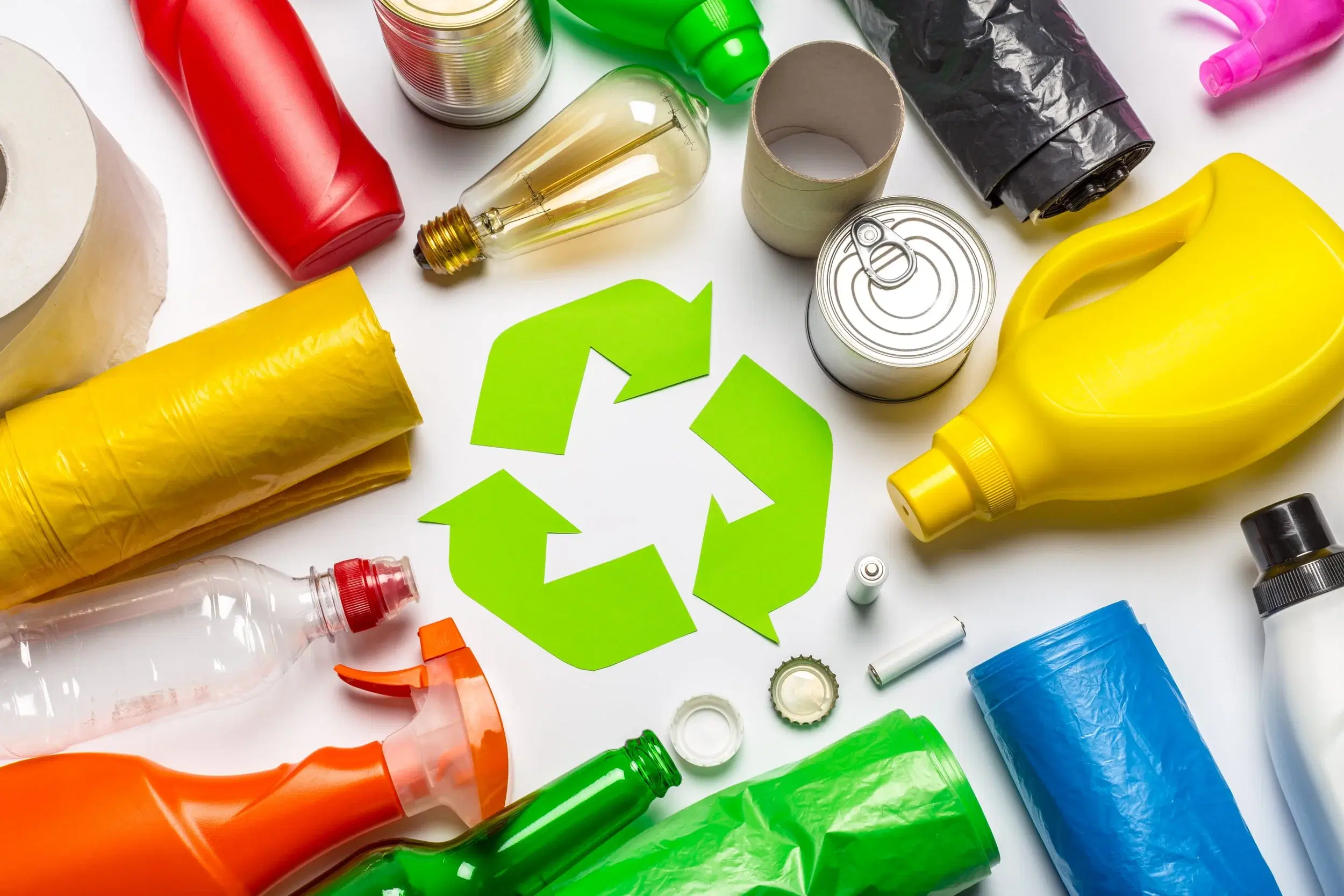
Philippines introduces bill mandating recycling label
Philippines House Bill No. 9281 would require recycling labels, material disclosures, disposal instructions, and substantiated packaging claims.
Vietnam cuts EPR contribution rates and simplifies extended producer filings for batteries, electronics, packaging, and other consumer products
Vietnam has lowered several EPR recycling contribution rates, consolidated producer filings and shifted administrative costs away from the Fs calculation under Circular 24/2026. The changes affect packaging, batteries, electronics, vehicles and other covered products.

EU consults on new harmonized classification for silver chloride, chloroethane and other chemicals
EU harmonized classification proposals for silver chloride, chloroethane, 1-isopropyl-2,2-dimethyltrimethylene diisobutyrate, N’-(1,3-dimethylbutylidene)-3-hydroxy-2-naphthohydrazide and Solvent Yellow 124 could trigger mixture reclassification, labeling changes, SDS updates and broader regulatory scrutiny across consumer and industrial products.
Also in the News
Also in the News
- 01Brazil adopts long-awaited RoHS framework for electrical and electronic equipment (EEE)Brazil · Jul 22, 2026
- 02Australia tightens controls on retinal as cosmetic safety concerns growAustralia · Jul 20, 2026
- 03Federal court pauses California “Truth in Recycling” compliance deadlineCalifornia · Jul 20, 2026
- 04Philippines adds 81 chemicals to national inventoryPhilippines · Jul 16, 2026
- 05Minnesota PFAS Reporting Deadline Nears as Extension and Waiver Requests Close August 16Minnesota · Jul 16, 2026
- 06Illinois Enacts 2028 Ban on PFAS and Other Chemicals in CosmeticsIllinois · Jul 13, 2026
- 07Peru’s new chemical notification and reporting rules: What companies must knowPeru · Jun 30, 2026
- 08Peru’s New GHS Rules: What companies need to know about classification, labels and safety Data SheetsPeru · Jun 30, 2026