



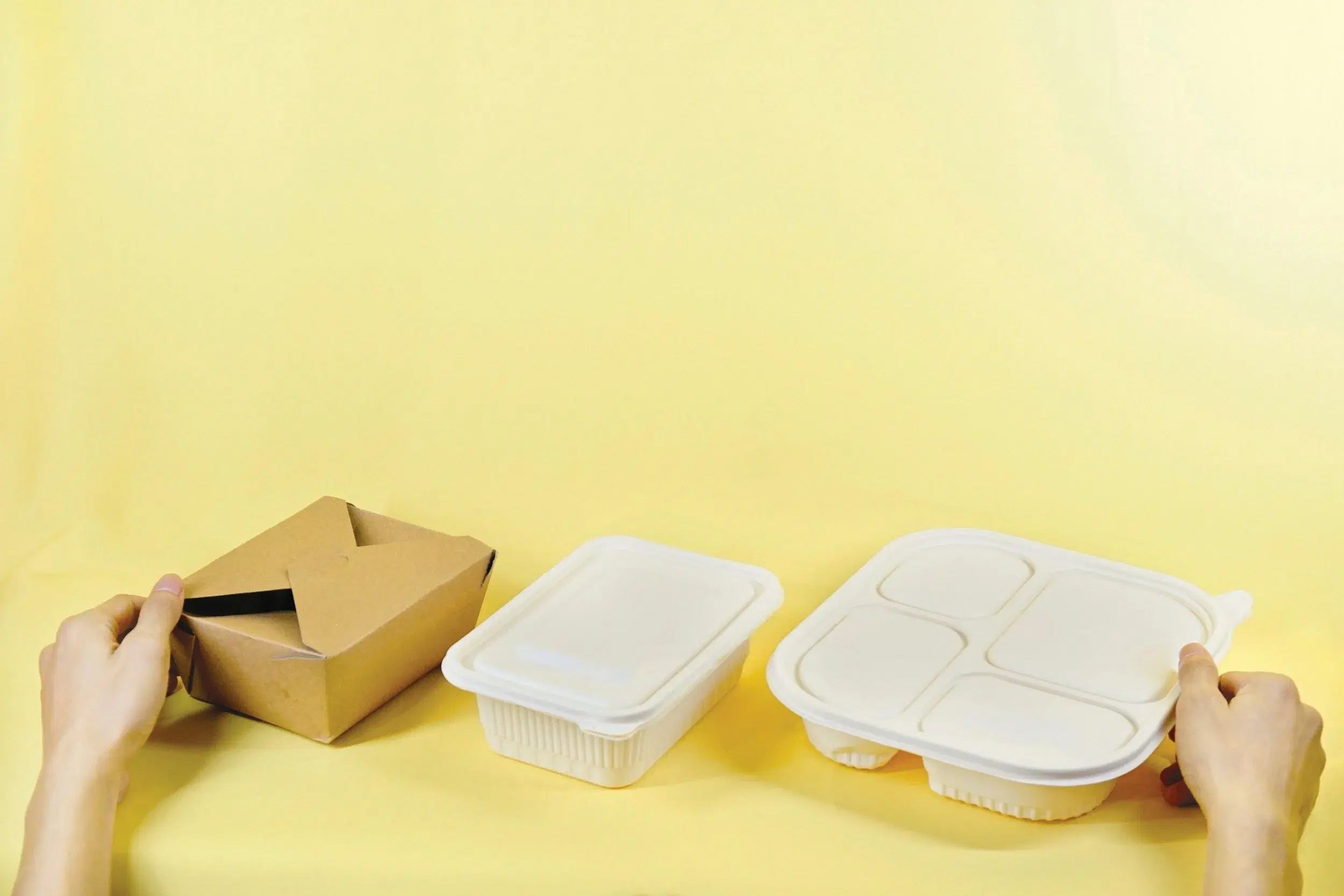
China's National Health Commission (NHC) has expanded the permitted uses of four additives in food-contact plastics, providing manufacturers with additional formulation options for food packaging, beverage containers, reusable food-contact articles, and food-processing equipment. Published on 23 November 2026, Announcement No. 7 of 2026 authorizes new applications for three colorants and one processing aid, subject to maximum use levels, purity requirements, and, for certain applications, restrictions on food types, contact temperatures, and durations.
The approvals expand the scope of permitted uses of substances already authorized under China's National Food Safety Standard for the Use of Additives in Food Contact Materials and Articles (GB 9685-2016).
Expanded use of colorants in food-contact plastics
The NHC authorizes two colorants for use in poly(cyclohexylenedimethylene naphthalate) (PCN) plastics:
C.I. Solvent Violet 36 (1,8-bis[(4-methylphenyl)amino]-9,10-anthracenedione; CAS 82-16-6): Previously authorized for applications including polyethylene terephthalate (PET) and polyvinyl chloride (PVC) plastics.
C.I. Solvent Blue 97 (1,4-bis[(2,6-diethyl-4-methylphenyl)amino]-9,10-anthracenedione; CAS 61969-44-6 and 32724-62-2): Previously authorized for applications including coatings, paper and paperboard, and various plastics.
Both substances are permitted at a maximum concentration of 0.0006% (6 mg/kg) in PCN plastics and must comply with the colorant purity requirements under Annex A of GB 9685-2016. The announcement does not establish an individual specific migration limit (SML) or maximum residual quantity (QM) for either substance under these new entries.
Potential downstream applications include colored beverage containers, food packaging and reusable food-storage articles manufactured from PCN plastics.
Adipic acid in food-processing equipment and food-contact articles
Adipic acid (hexanedioic acid; CAS 124-04-9) is now permitted at a maximum concentration of 0.02% (200 mg/kg) in polyoxymethylene (POM) plastics. The substance serves as a processing aid to suppress formaldehyde formation during resin processing.
Also known as acetal or polyacetal, POM is an engineering thermoplastic valued for its mechanical strength, dimensional stability, low friction and wear resistance. Potential food-contact applications include conveyor components, valves, gears, beverage dispensing systems and other components of food-processing machinery.
The NHC establishes different contact conditions depending on the type of food:
Acidic foods: Maximum temperature of 70°C and contact duration of two hours.
Foods containing fats or oils: Maximum temperature of 100°C and contact duration of two hours.
Other food categories: Maximum temperature of 100°C and contact duration of four hours.
These restrictions are particularly relevant to equipment used in processing and dispensing acidic beverages, sauces, edible oils and other food products, where operating temperatures and contact durations can vary considerably.
The restrictions must be indicated through labeling in accordance with China's National Food Safety Standard for General Safety Requirements for Food Contact Materials and Articles (GB 4806.1).
Zinc oxide in food-contact polysulfone plastics
Zinc oxide (C.I. Pigment White 4; CAS 1314-13-2) is now authorized as a colorant in polysulfone (PSU) plastics at a maximum concentration of 0.23% (2,300 mg/kg).
Polysulfone's thermal stability, mechanical strength and durability make it suitable for applications such as reusable food-service articles, food-handling containers and components of food-processing equipment. However, the new authorization restricts the conditions under which articles containing zinc oxide may be used.
Food-contact materials and articles manufactured from PSU plastics containing the substance:
Must not exceed a food-contact temperature of 70°C.
Must not exceed a contact duration of 24 hours per use.
Must not come into contact with foods containing fats or oils.
Must not come into contact with foods containing more than 50% ethanol.
Must not be used to manufacture food-contact materials or articles specifically intended for infants and young children.
Zinc oxide must also comply with the colorant purity requirements under Annex A and the specific migration limit for zinc under Annex C of GB 9685-2016. The applicable use restrictions must be communicated through labeling in accordance with GB 4806.1.
Implications for food-contact material manufacturers
The expanded authorizations provide manufacturers with greater flexibility in selecting additives for food-contact plastic formulations. However, manufacturers of multipurpose food-contact articles and equipment may need to reassess their intended applications, particularly where products are designed to handle multiple food categories or operate under varying temperature conditions.
The approvals concern additives incorporated into food-contact materials and articles; they do not constitute new authorizations for the direct addition of these substances to food.
Further details are available in Annex 3 of NHC Announcement No. 7 of 2026 and the NHC's accompanying explanatory document.